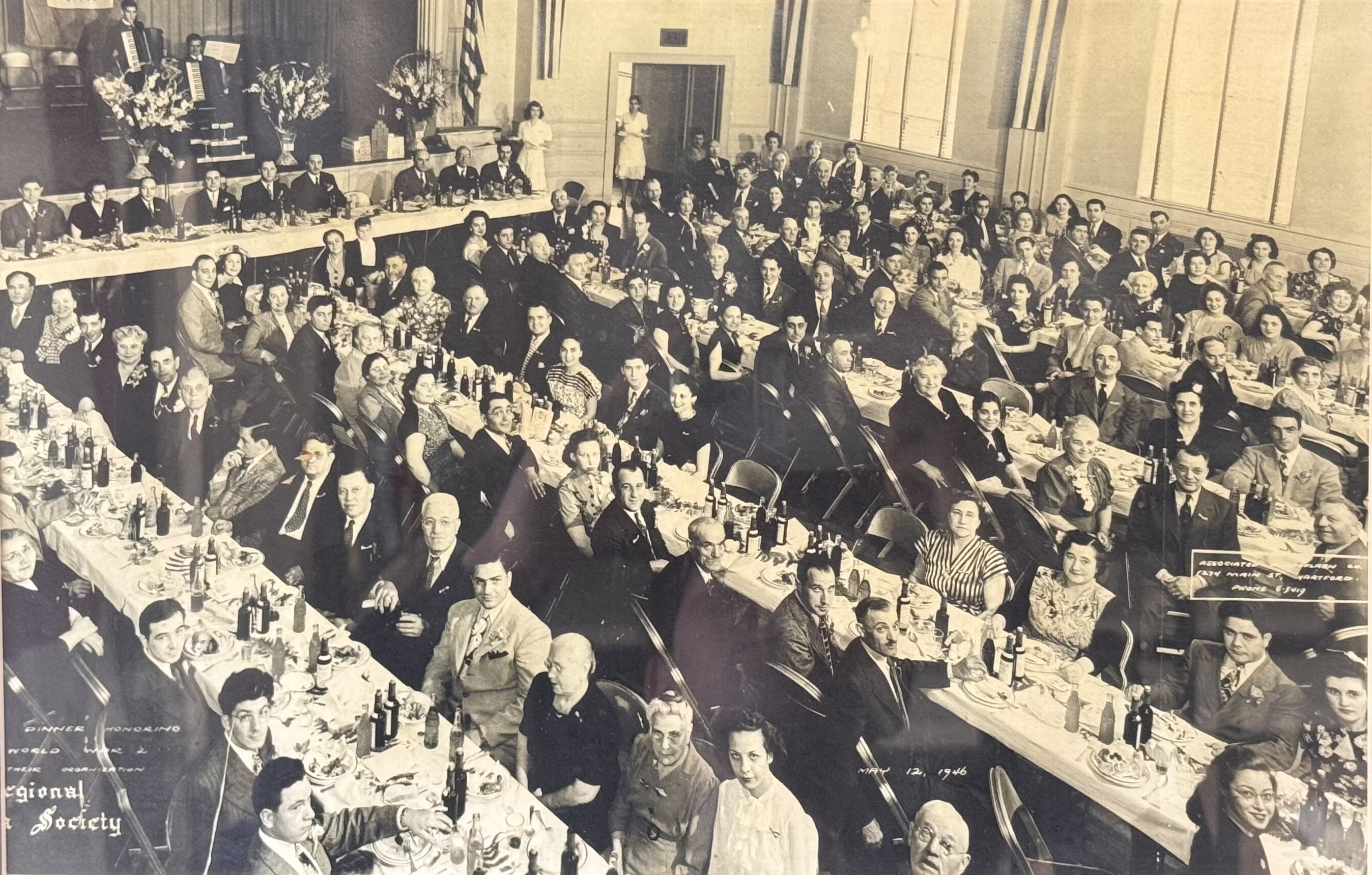
Marchegian Club
226 Cedar Street, New Haven, CT 06519
Long ago, in an era in which ethnic ties and civic participation reigned supreme, 226 Cedar Street was at the center of a thriving community. Home to New Haven’s Marchegian Club—an organization made up of immigrants from the Marche region of Italy and their descendants—the building once offered an island of ethnic solidarity in an often-unwelcoming society. Times have changed, of course, and the Marchegian Club, a veritable fortress, now stands as a relic of an earlier New Haven—and of an earlier world.
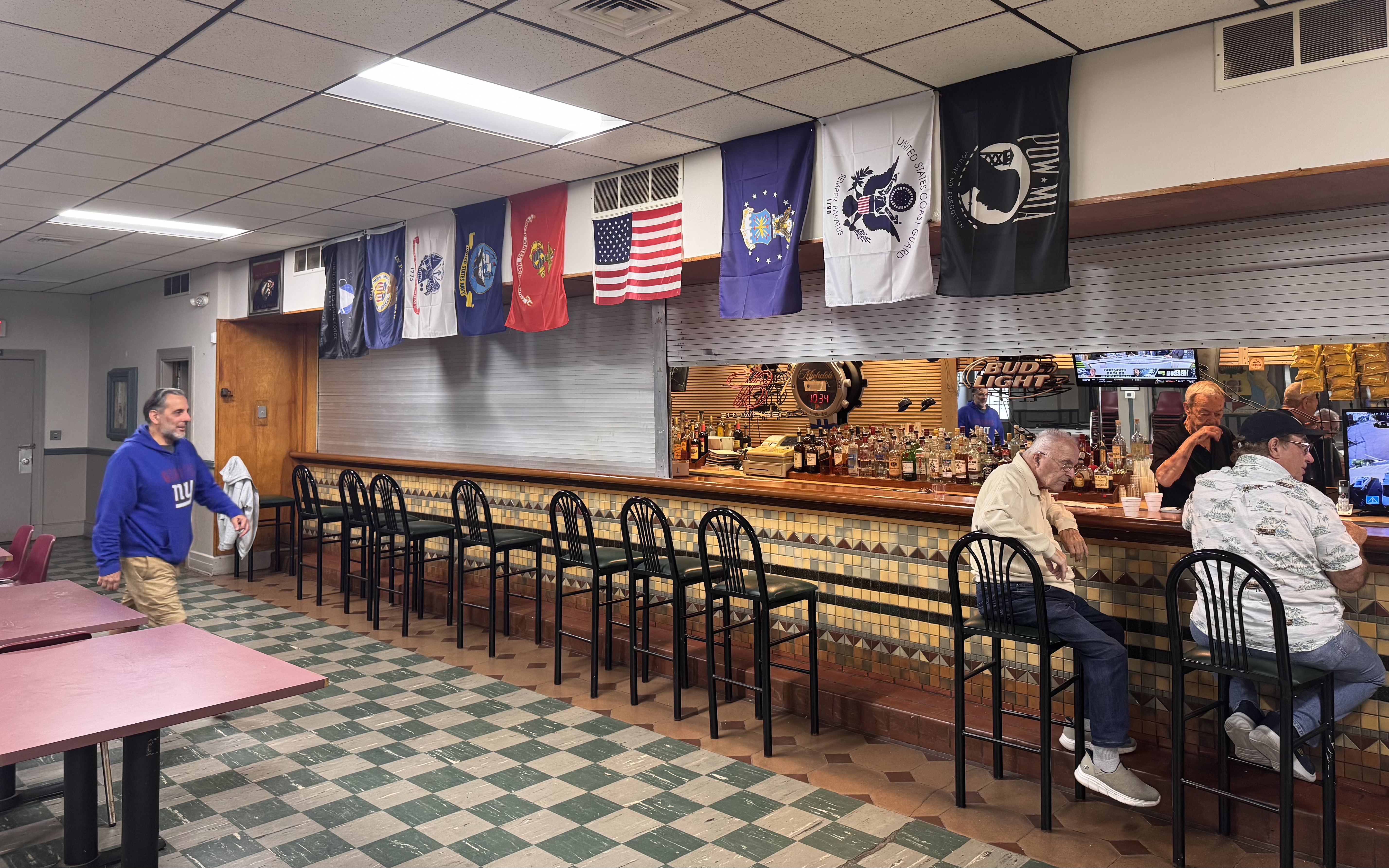
The present building is eighty-seven years old, although the club itself dates to 1909. Its unique Streamline Moderne design stands out in a low-slung, low-density section of the Hill. Three kitchens, a bocce court, a ballroom, and, most importantly, a bar are hidden within its walls. A committed contingent of Marchegians still gather inside: for a few hours, it is as though nothing has changed.
The Marchegian Club stands on the corner of Cedar and Minor Streets. Its block, also bounded by Columbus and Howard Avenues, is simply identified as “Trowbridge” in an 1888 atlas. Over a dozen buildings appear on that block in a 1901 fire insurance map, although the club’s site is empty. From 1903–1923, the Danish-Norwegian Evangelical Free Church inhabited a Carpenter Gothic building on the plot; a colorized photograph reveals that it complemented the nearby wood-frame houses.
The society purchased the building at some point after 1923; the Societa Regionale Marchigiana is listed at 226 Cedar St. in a 1928 directory. Plans for a new clubhouse were approved by city officials in 1937; the building was designed by Lester J.A. Julianelle—a Yale graduate whose office stood a block away from the New Haven Green—and was projected to cost around $50,000.
For its entire 87 years of existence, this building has housed the Marchegian Club. (At its 1909 founding, the club met at one of its member’s Minor Street boarding house.) Membership today is far below its 1950s peak of around 800, says Baldelli. The inevitability of assimilation has taken its toll; the number of Italians immigrating to the US has also dwindled. As Baldelli puts it, “they don’t come over anymore because la bella vita is in Italy, not in the United States.”
Baldelli is quick to add, though, that “to this day, we’re still a Marchegian society. You have heritage that comes from that to belong to this club.”
Marchegians stood (and stand) apart from the majority of New Haven’s Italian Americans, who trace their roots to southern Italy and who mostly settled in Wooster Square.
“We’re warm but not huggers and kissers, not quite as expressive as the stereotypical Italian,” Florence Tomasini told a New Haven Independent reporter in 1988. “We’re very hardworking,” she said, adding that “the women are stubborn and the men are impossible.”
In the 2010s, the clubhouse hosted New Haven police union meetings and even one mayoral debate. And in 2015, Columbus House, a homeless shelter, used the club’s second floor as a 75-bed overflow facility.
The Marchegian Club is surrounded by great architectural diversity: the modernist and postmodern buildings of the Yale New Haven Hospital ecosystem, low-slung brick factories and warehouses, Romanesque and Renaissance Revival civic buildings, and simple wood-frame homes.
The building itself is now surrounded by parking on three sides. The gray asphalt appears incongruous with the brick fortress that is the club, but parking is perhaps the primary reason the club survives. All its members live in the suburbs around New Haven, according to the club’s president, Larry Baldelli. (“All hell broke loose in New Haven,” he says, “when Mayor Lee came in and knocked all the buildings down and everybody moved out of the neighborhoods.”) “This place, it still survives because we’re okay with a parking lot,” says Gino Cervoni, another member. “If it wasn’t for that, this place—poof.”
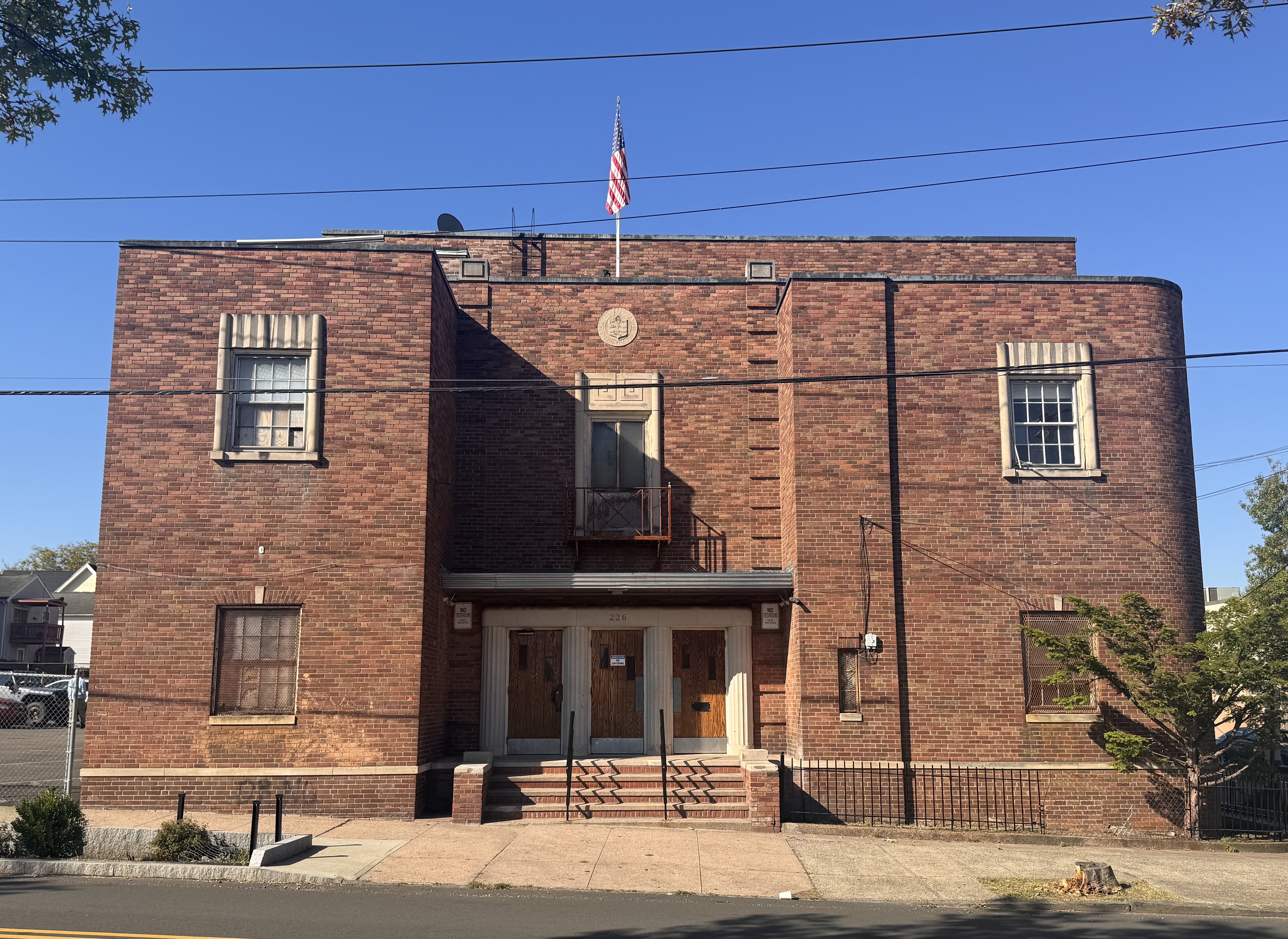
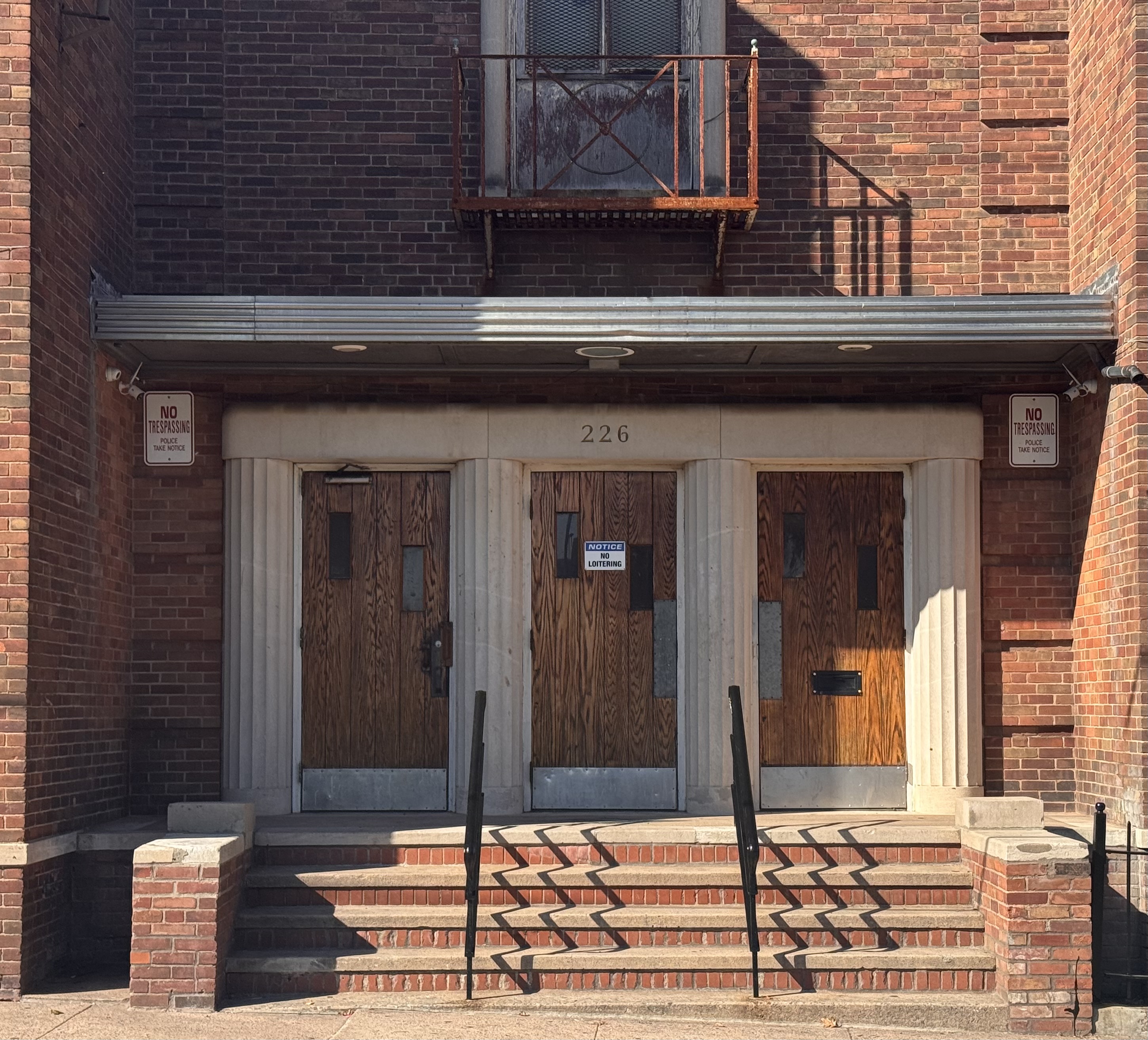
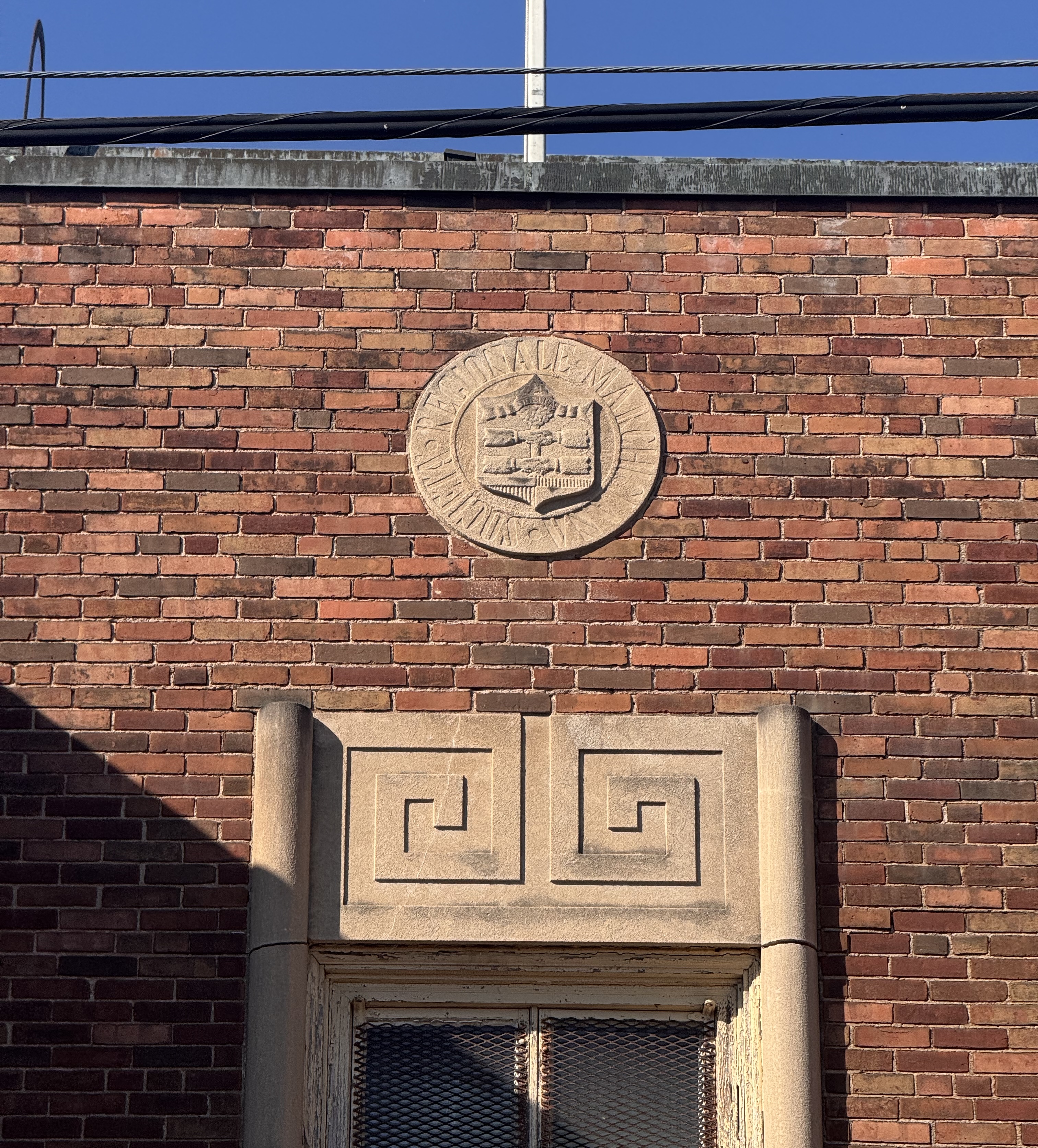
226 Cedar presents a squat, horizontally oriented face to the street. Its façade is modulated and features several distinct planes. Perhaps its most notable feature is a recessed central bay that includes the building’s (disused) entrance doors. A flight of four shallow stairs leads to the entry. Four fluted stone columns frame the three doors; above them rests an austere, stripped-back entablature on which “226” is engraved. An awning that projects above the doors is fronted with ridged metal plating. Further up, a singular window is centered between two decorative stone pilasters and is topped with a pair of Greek meanders in relief. The top of the façade also features the Marchegian Club’s crest in a stone relief medallion. Stacks of projecting brick rectangles on either side of the central bay mimic the rusticated masonry of neoclassical architecture.
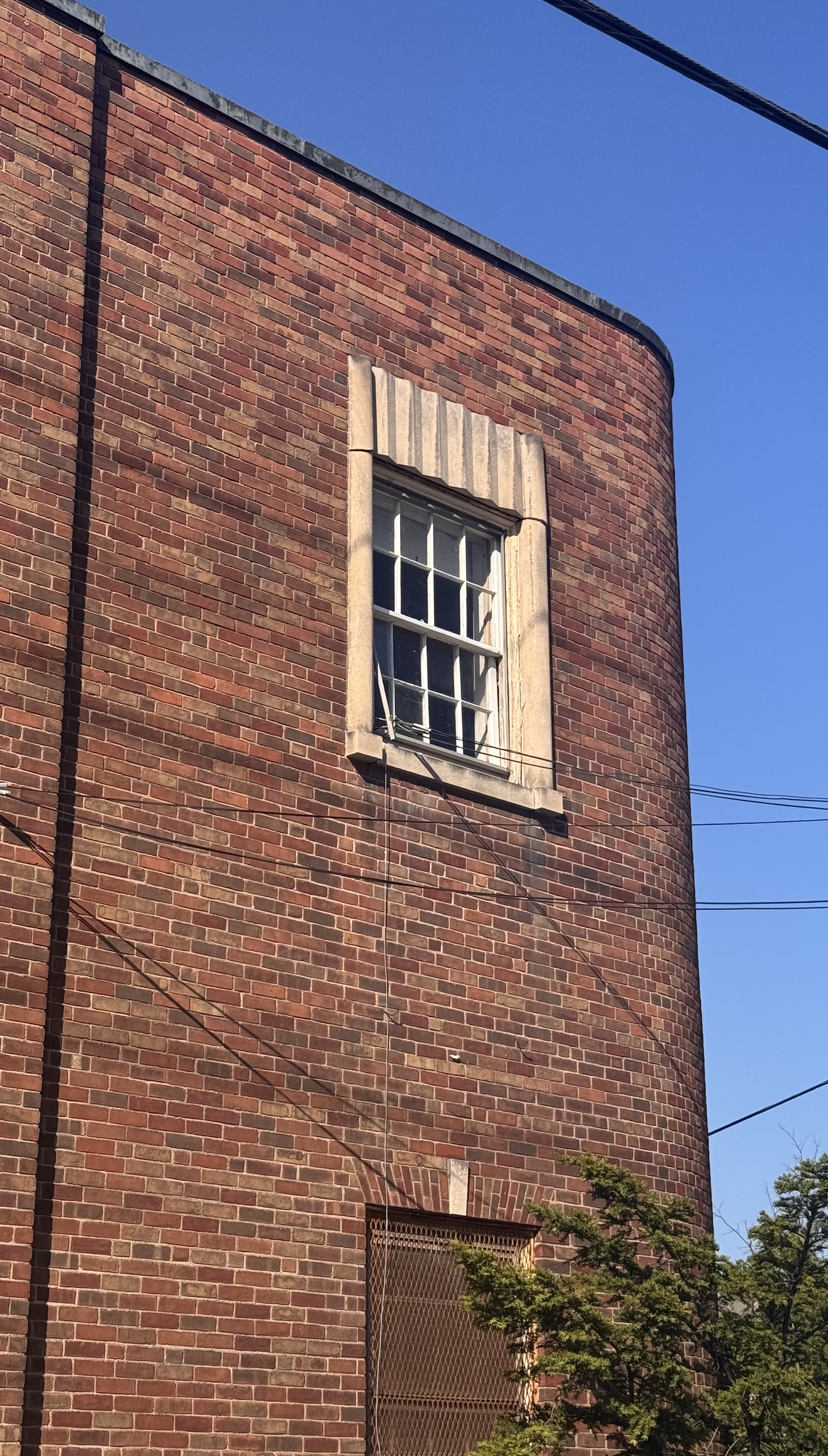
The building is not quite symmetrical: the leftmost portion of its tripartite façade projects outward more than the rightmost does. Both include a first-floor window with a concrete sill and a cornice simulated by slanted bricks and a keystone. The second-floor windows on each side feature stone pilasters like those at central window, though they are each topped with stone detailing that seems to mimic corrugated metal. The rightmost piece of the façade, which is wider than its counterpart, also includes a small, narrow window on the first floor. The corner here—between the building’s Cedar Street and Minor Street façades—is curved; it seems in conversation with the street corner itself.
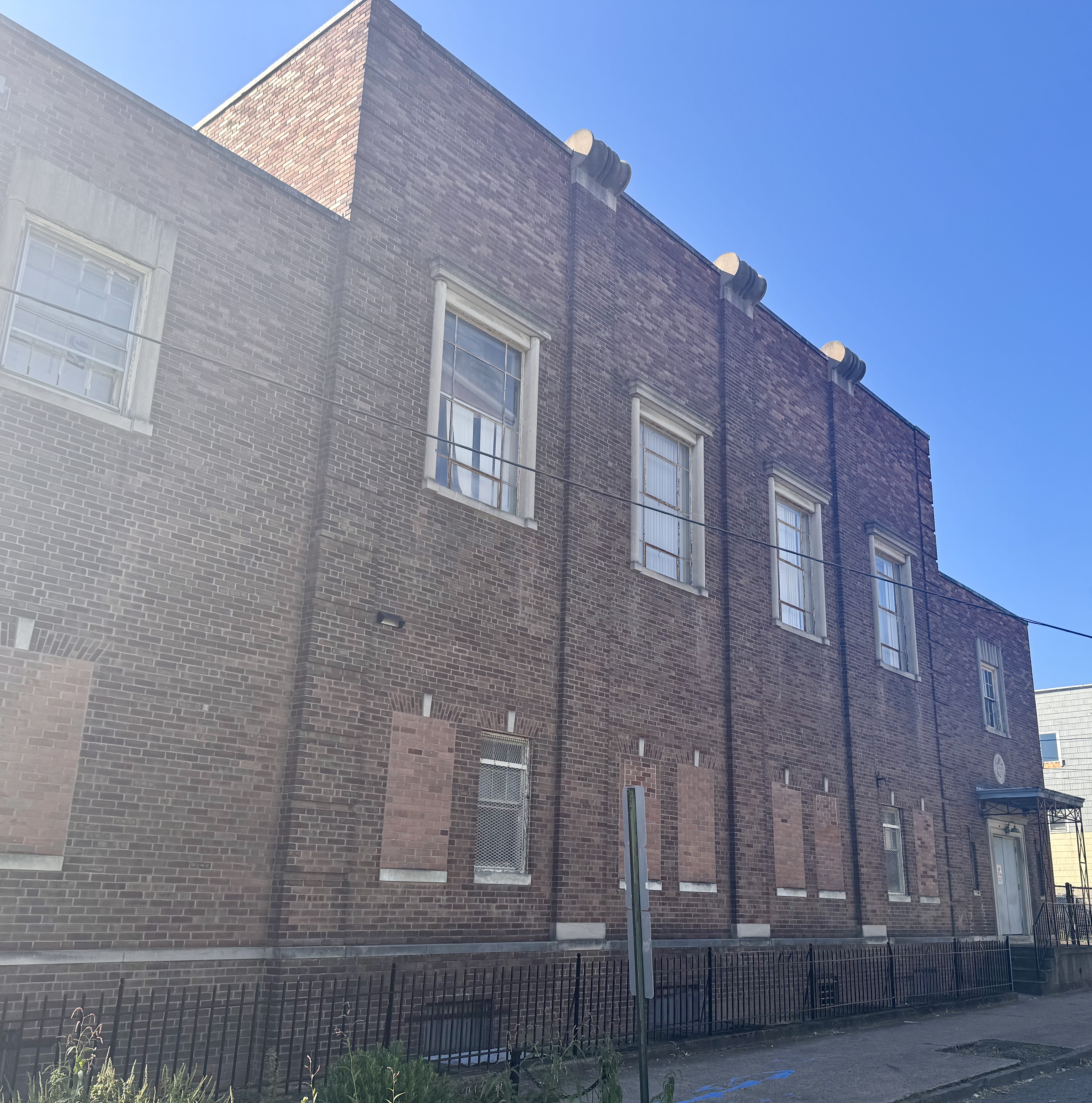
In addition to its vertical divisions, the façade is articulated, with taller portions of the building set back from the street to create a stepped profile.
The side of the building that faces Minor Street also has some ornamentation. Its shorter portions feature second-story windows with the same pilaster and corrugated stone design as the front; four windows on the central, taller segment are framed by stone pilasters and are topped with simple stone cornices. These windows are separated with projecting pilasters expressed in brick and topped with a volute-like stone element. The first-floor windows on this side of the building are mostly filled in with brick, though they still feature sills, keystones, and simulated cornices.
The building’s other side is much less detailed. While it also has subtly projecting pediments, its four second-story windows feature no ornamentation at all.
Aside from stone details, the entire façade is composed of brown brick.
Arnold Guyot Dana Scrapbook Collection. Whitney Library. New Haven Museum.
Atlas of the City of New Haven, Connecticut: From the Triangulations, Surveys and Maps of the City Engineer's Department. G.M. Hopkins, 1888.
Bailey, Melissa. “Cleavage, Tardy Checks Prompt Union Vote.” New Haven Independent, September 1, 2010, https://www.newhavenindependent.org/2010/09/01/police_seek_no_confidence_vote/.
Bass, Paul. “At Debate, Fernandez Presses Harp On Keno,” New Haven Independent, July 9, 2013, https://www.newhavenindependent.org/2013/07/09/join_us_live7/.
——. “Cops Ratify Contract; Cavaliere Makes the Sale.” New Haven Independent, February 7, 2013, https://www.newhavenindependent.org/2013/02/07/cops_ratify_new_contract/.
Insurance Maps of New Haven, Connecticut: Volume One. Sanborn, 1923. https://collections.library.yale.edu/catalog/11189760.
Insurance Maps of New Haven, Connecticut: Volume Two. Sanborn, 1901. https://collections.library.yale.edu/catalog/11188891.
Insurance Maps of New Haven, Connecticut. Sanborn, 1911. https://maps.library.yale.edu/images/public/zoomify/ANH_1911_015.html.
Koyl, George S., ed. American Architects Directory. R.R. Bowker, 1956. https://aiahistoricaldirectory.atlassian.net/wiki/spaces/AHDAA/pages/20644319/1956+American+Architects+Directory.
New Haven Alphabetical Directory. Price & Lee, 1928.
Shapiro, Bruce. “Marchegians: The Hill’s ‘Other’ Italians.” New Haven Independent, March 3, 1988, microfiche, Film Collection, Whitney Library, New Haven Museum.
Shelton, Jim. “Cent' anni: Marchegian Society Celebrates 100th Anniversary in Elm City.” New Haven Register, November 5, 2009, https://www.nhregister.com/news/article/Cent-anni-Marchegian-Society-celebrates-100th-11630077.php.
Swaby, Aliyya. “Winter Overflow Shelter Cleared to Open Monday.” New Haven Independent, November 11, 2015, https://www.newhavenindependent.org/2015/11/11/winter_homeless_shelter_to_open_monday/.
Trinity Evangelical Free Church. “Our History.” Accessed October 5, 2025. https://trinityefc.churchcenter.com/pages/about.
Saved edits to this building (newest first). Each row is logged when an editor saves changes.
No recorded edits yet.
Researcher
Elijah Hurewitz-Ravitch
Entry Created
December 4, 2025 at 6:41 AM EST
Historic Name
Societa Regionale Marchigiana
Style
Art DecoCurrent Use
OtherCultural CenterEra
1910-1950Neighborhood
HillYear Built
1936–1937
Architect
Lester J.A. Julianelle
Current Tenant
Marchegian Club
Roof Types
FlatThreats
Neglect / DeteriorationDimensions
56’ x 94’
Owner
Society Regionale
Ownernishp Type
2
Client
Societa Regionale Marchigiana
Historic Uses
OtherCultural Center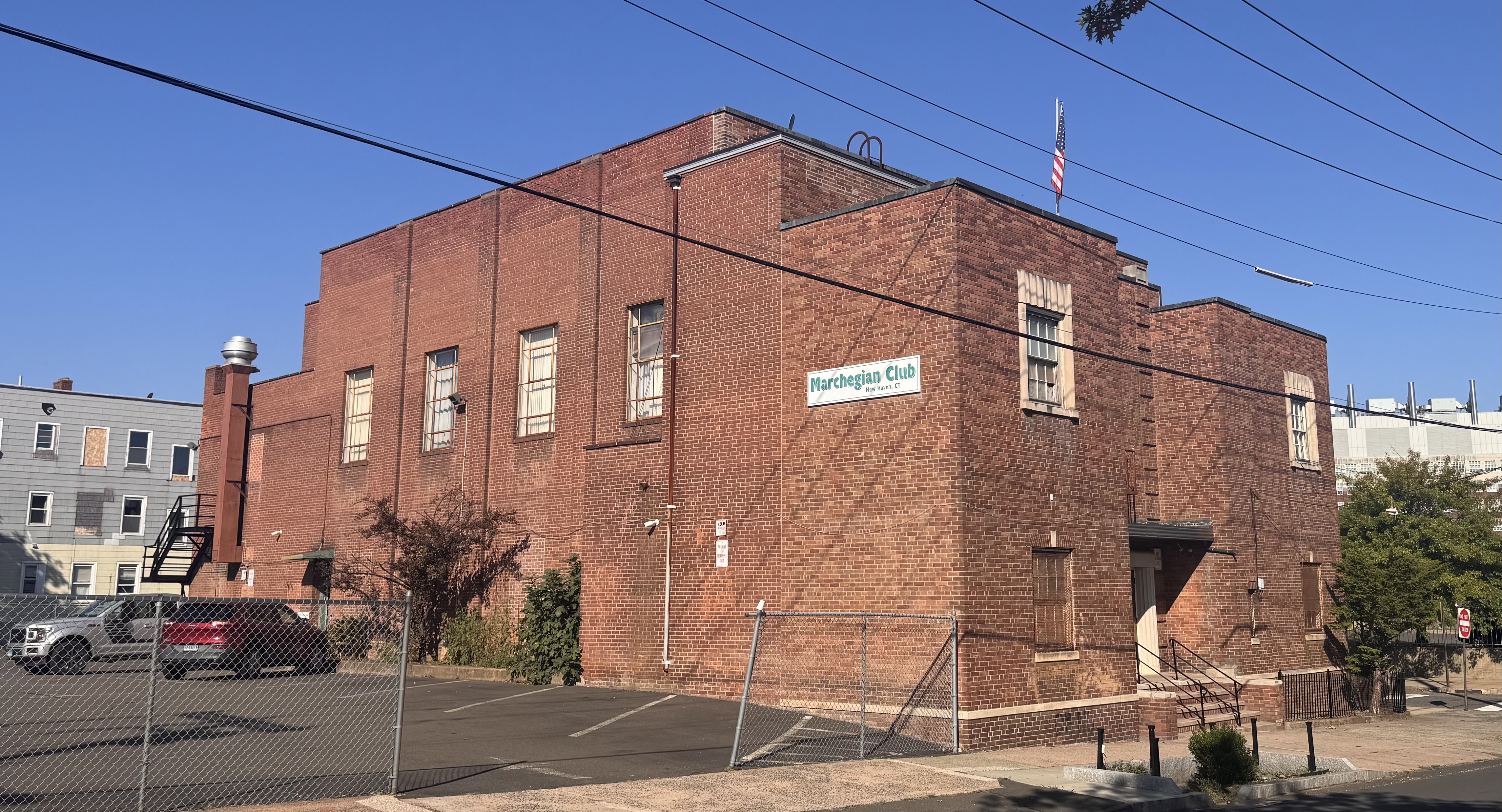
Comments
You are not logged in! Please log in to comment.