Stoeckel Hall
96 Wall Street 06511
Many of the buildings of the Yale Department of Music are located on College Street, such as Sprague Hall, Leigh Hall, Hendrie Hall, and Stoeckel Hall. While walking to Stoeckel Hall, I often see students carrying instruments pass by on their way to classes or practice sessions. Besides its proximity to the rest of the music department, Stoeckel Hall is also a block away from Silliman College and is located near cross-campus and the Sterling and Bass libraries. The Yale shuttle also has a stop beside Stoeckel Hall, and students are commonly seen hopping on and off the shuttle to arrive at where they need to be. Apart from students, tour groups are also seen wandering the area when they visit the Yale campus, as Stoeckel Hall is located at the border of one of the busiest areas of Yale. Even during the evening, many people are still seen crossing the road and walking on College Street as they leave or enter the libraries, head back to their residential college, and more.
Furthermore, Stoeckel Hall stands out when compared with buildings nearby. A Federal-style building, the Elizabethan Club stands right beside Stoeckel Hall and does not make use of ornate designs on its exterior. Furthermore, it is smaller, has a triangular roof, and looks like a house. Still during the renovation of Stoeckel Hall and its expansion, Daniel Harrison, the chair of the Department of Music, noted that the goal was “to create a modern building, but be a good neighbor to the Elizabethan Club and not loom over the building.” This goal was achieved as the expansion because the expansion of Stoeckel Hall remained within its own area, and the bricks on its exterior blended in with the original.
On the other side of Stoeckel Hall, St. Anthony Hall stands tall, with pointed roofs and several bay windows. St. Anthony Hall takes up a much larger area than Stoeckel Hall does, and it is right beside Silliman College, which is a residential college featuring a large gate and a tall tower on College Street. Both Silliman College and St. Anthony Hall take up large areas and have tall towers, both of them appearing to be much larger and taller than Stoeckel Hall. Among all the buildings near Stoeckel Hall, Sprague Memorial Hall shares the most similarities with Stoeckel Hall and is right across the road. Sprague Memorial Hall also has walls made of red brick and features a balustrade on the very top of the building. Still, its similarities with Stoeckel Hall seem to end there, with only the red brick walls to indicate that the two buildings are part of the same department at Yale. Overall, Sprague Hall does not have a lot of ornate designs on its exterior and is simple compared to Stoeckel Hall. Generally, Stoeckel Hall stands out with regard to its neighboring buildings as it is the only Venetian style building featuring much ornate designs.
Furthermore, Stoeckel Hall stands out when compared with buildings nearby. A Federal-style building, the Elizabethan Club stands right beside Stoeckel Hall and does not make use of ornate designs on its exterior. Furthermore, it is smaller, has a triangular roof, and looks like a house. Still during the renovation of Stoeckel Hall and its expansion, Daniel Harrison, the chair of the Department of Music, noted that the goal was “to create a modern building, but be a good neighbor to the Elizabethan Club and not loom over the building.” This goal was achieved as the expansion because the expansion of Stoeckel Hall remained within its own area, and the bricks on its exterior blended in with the original.
On the other side of Stoeckel Hall, St. Anthony Hall stands tall, with pointed roofs and several bay windows. St. Anthony Hall takes up a much larger area than Stoeckel Hall does, and it is right beside Silliman College, which is a residential college featuring a large gate and a tall tower on College Street. Both Silliman College and St. Anthony Hall take up large areas and have tall towers, both of them appearing to be much larger and taller than Stoeckel Hall. Among all the buildings near Stoeckel Hall, Sprague Memorial Hall shares the most similarities with Stoeckel Hall and is right across the road. Sprague Memorial Hall also has walls made of red brick and features a balustrade on the very top of the building. Still, its similarities with Stoeckel Hall seem to end there, with only the red brick walls to indicate that the two buildings are part of the same department at Yale. Overall, Sprague Hall does not have a lot of ornate designs on its exterior and is simple compared to Stoeckel Hall. Generally, Stoeckel Hall stands out with regard to its neighboring buildings as it is the only Venetian style building featuring much ornate designs.
• 1897 – 1935: Chi Phi Fraternity
• 1935 – 1954: Yale Students (used as dormitory)
• 1954 – Present: Yale University
• 1935 – 1954: Yale Students (used as dormitory)
• 1954 – Present: Yale University
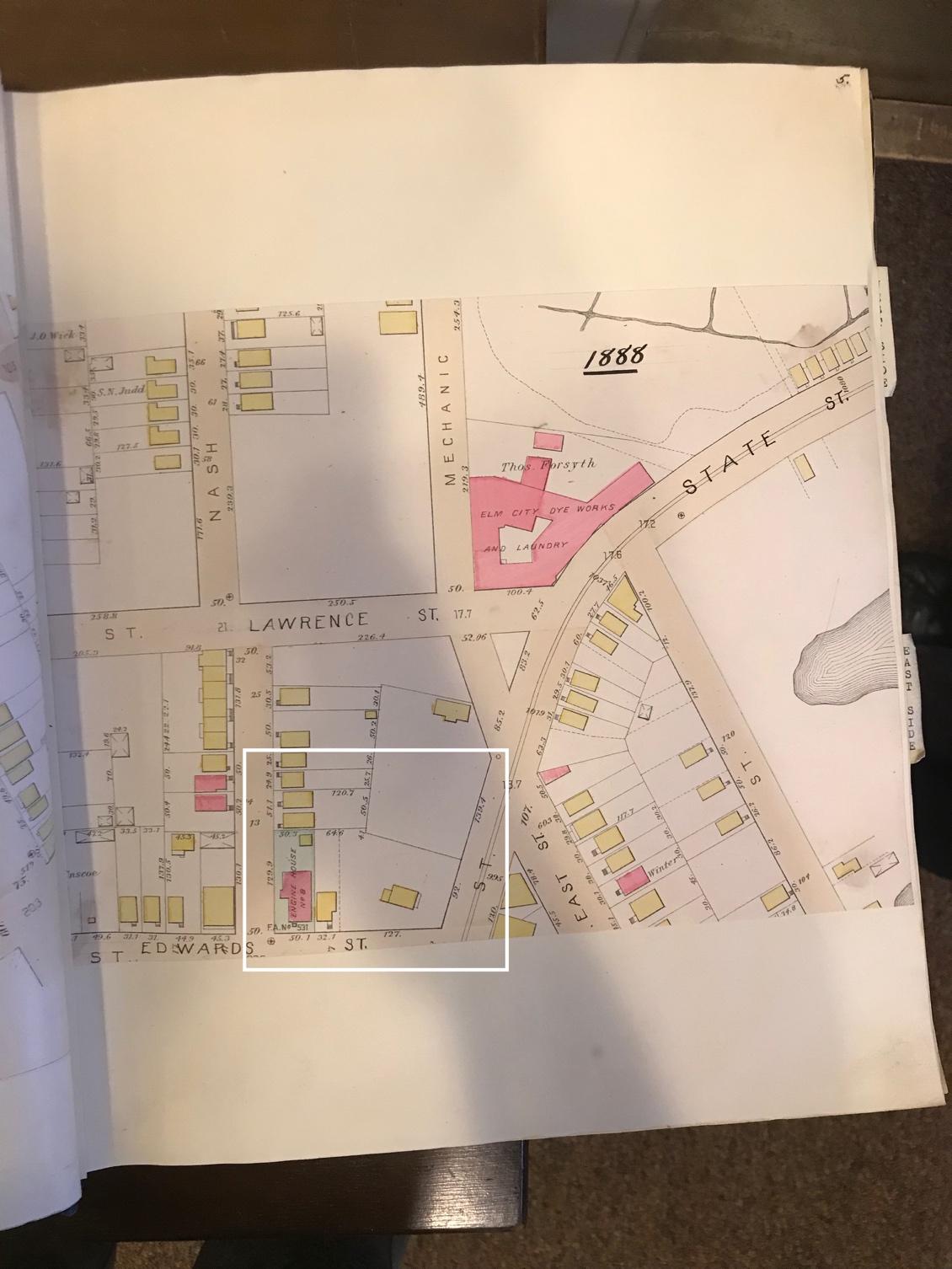
According to a directory from 1841, which was the oldest record I found, the land that Stoeckel Hall currently rests on was owned by Alfred Walker with a frame house in its place. In 1888, the site was still owned by Alfred Walker, and it seems to have remained in Alfred Walker’s possession until the area was owned by the Sheffield Scientific School. Besides this, in 1888, the other property around this site seem to have had homes owned by different individuals as well, such as Timothy Dwight and Julius Tuttle. However, a few Yale College buildings were already present in the area, such as the Yale College Divinity School. In 1911, most of the houses were gone, and a lot of the land in the area was owned by either Sheffield Scientific School or Yale College.
Stoeckel Hall, previously named York Hall, was previously part of the Sheffield Scientific School, when the Chi Phi fraternity was founded in 1878. A historian, Loomis Havenmeyer, commented that “during the second half of the nineteenth century, Yale College and Sheffield Scientific School, separated by only a few streets, were two separate countries on the same planet.” Until 1945, the Sheffield Scientific School and Yale College were separate entities Several of Yale’s current facilities were originally built for the Sheffield School, such as the Mason and Dunham laboratories. Fraternities started at the Sheffield School as students searched for housing. While Yale provided dormitories for their own students, students at the Sheffield School had to look for their own housing. Hence, a few students “leased houses, known as clubhouses, with their peers.” When the Sheffield students living in these houses graduated, they looked for freshmen to replace them, and a type of selection process was born. Here, students were physically and socially isolated if they were not a part of a clubhouse. Eventually, these clubhouses evolved into fraternities. However, when Silliman College (previously called Vanderbilt-Sheffield) was built as a dormitory for the Sheffield students, Yale began to buy the clubhouses and use them for other purposes. Finally, in 1945, the Sheffield School became part of Yale College, and its remains are still evident in Yale today, specifically in its academic curriculum and secret societies. The integration of Sheffield School, one of the first schools which integrated science with liberal arts, with Yale definitely changed the direction of Yale’s education and experience to what it is today.
York Hall itself was bought by Yale in 1935 and was a dormitory until 1954, when it was converted for the use of the School of Music. It was renamed to Stoeckel Hall after Gustave Stoeckel, who was the first music professor at Yale, the first conductor of the Yale Glee Club, and the first to be awarded with a doctorate in music at Yale in 1864, when York Hall had not even been built yet. By renaming York Hall to Stoeckel Hall, Yale honors the many developments and contributions that Gustave Stoeckel has brought to the Yale Music Department, which has expanded since then.
York Hall itself was bought by Yale in 1935 and was a dormitory until 1954, when it was converted for the use of the School of Music. It was renamed to Stoeckel Hall after Gustave Stoeckel, who was the first music professor at Yale, the first conductor of the Yale Glee Club, and the first to be awarded with a doctorate in music at Yale in 1864, when York Hall had not even been built yet. By renaming York Hall to Stoeckel Hall, Yale honors the many developments and contributions that Gustave Stoeckel has brought to the Yale Music Department, which has expanded since then.
Many of the buildings of the Yale Department of Music are located on College Street, such as Sprague Hall, Leigh Hall, Hendrie Hall, and Stoeckel Hall. While walking to Stoeckel Hall, I often see students carrying instruments pass by on their way to classes or practice sessions. Besides its proximity to the rest of the music department, Stoeckel Hall is also a block away from Silliman College and is located near cross-campus and the Sterling and Bass libraries. The Yale shuttle also has a stop beside Stoeckel Hall, and students are commonly seen hopping on and off the shuttle to arrive at where they need to be. Apart from students, tour groups are also seen wandering the area when they visit the Yale campus, as Stoeckel Hall is located at the border of one of the busiest areas of Yale. Even during the evening, many people are still seen crossing the road and walking on College Street as they leave or enter the libraries, head back to their residential college, and more.
Furthermore, Stoeckel Hall stands out when compared with buildings nearby. A Federal-style building, the Elizabethan Club stands right beside Stoeckel Hall and does not make use of ornate designs on its exterior. Furthermore, it is smaller, has a triangular roof, and looks like a house. Still during the renovation of Stoeckel Hall and its expansion, Daniel Harrison, the chair of the Department of Music, noted that the goal was “to create a modern building, but be a good neighbor to the Elizabethan Club and not loom over the building.” This goal was achieved as the expansion because the expansion of Stoeckel Hall remained within its own area, and the bricks on its exterior blended in with the original.
On the other side of Stoeckel Hall, St. Anthony Hall stands tall, with pointed roofs and several bay windows. St. Anthony Hall takes up a much larger area than Stoeckel Hall does, and it is right beside Silliman College, which is a residential college featuring a large gate and a tall tower on College Street. Both Silliman College and St. Anthony Hall take up large areas and have tall towers, both of them appearing to be much larger and taller than Stoeckel Hall. Among all the buildings near Stoeckel Hall, Sprague Memorial Hall shares the most similarities with Stoeckel Hall and is right across the road. Sprague Memorial Hall also has walls made of red brick and features a balustrade on the very top of the building. Still, its similarities with Stoeckel Hall seem to end there, with only the red brick walls to indicate that the two buildings are part of the same department at Yale. Overall, Sprague Hall does not have a lot of ornate designs on its exterior and is simple compared to Stoeckel Hall. Generally, Stoeckel Hall stands out with regard to its neighboring buildings as it is the only Venetian style building featuring much ornate designs.
Furthermore, Stoeckel Hall stands out when compared with buildings nearby. A Federal-style building, the Elizabethan Club stands right beside Stoeckel Hall and does not make use of ornate designs on its exterior. Furthermore, it is smaller, has a triangular roof, and looks like a house. Still during the renovation of Stoeckel Hall and its expansion, Daniel Harrison, the chair of the Department of Music, noted that the goal was “to create a modern building, but be a good neighbor to the Elizabethan Club and not loom over the building.” This goal was achieved as the expansion because the expansion of Stoeckel Hall remained within its own area, and the bricks on its exterior blended in with the original.
On the other side of Stoeckel Hall, St. Anthony Hall stands tall, with pointed roofs and several bay windows. St. Anthony Hall takes up a much larger area than Stoeckel Hall does, and it is right beside Silliman College, which is a residential college featuring a large gate and a tall tower on College Street. Both Silliman College and St. Anthony Hall take up large areas and have tall towers, both of them appearing to be much larger and taller than Stoeckel Hall. Among all the buildings near Stoeckel Hall, Sprague Memorial Hall shares the most similarities with Stoeckel Hall and is right across the road. Sprague Memorial Hall also has walls made of red brick and features a balustrade on the very top of the building. Still, its similarities with Stoeckel Hall seem to end there, with only the red brick walls to indicate that the two buildings are part of the same department at Yale. Overall, Sprague Hall does not have a lot of ornate designs on its exterior and is simple compared to Stoeckel Hall. Generally, Stoeckel Hall stands out with regard to its neighboring buildings as it is the only Venetian style building featuring much ornate designs.
Stoeckel Hall is the only building on the Yale campus which embodies the Late Gothic Revival, specifically Venetian, style. The building embodies several notable characteristics of Venetian architecture, which are discussed in further detail later. Among these characteristics are big windows that allow for natural light inside the hall, brick walls, and ornate carvings.
While its exterior displays intricate patterns around its central windows and the top of the building, the hall incorporates simpler and plainer designs that provides balance to the overall appearance of the building. It was built using practical materials, such as red brick, limestone, and terra cotta. These provide support and structure, and these materials are also long-lasting.
While the hall was built with practicality in mind, the building features ornate designs on both College and Wall Street façades. On College Street, one can see the bracketed cornice on the attic of the building along with a row of windows with decorate arches. The attic’s cornice and windows are slightly above and behind the main cornice, which has greater detail and rests on detailed brackets. The wall itself is made of bricks, with the second and third floors having red bricks while the first floor is made of buff brick, which are yellowish brown in color. On the sides of the building, there are also raised bricks, which create quoined corners. The second floor also has panes of glass separated by overlapping arches, creating a five-light window at its center. In front of this window, there is a short balustrade with star designs on them, resting on brackets decorated with lion heads, just above the first floor. The first floor also features windows at its center similar to those on the second floor, but they make use of triple arches. Both central windows on the first and second floors incorporate Venetian-style traceries.
These features still remain on the Wall Street façade of Stoeckel Hall. However, instead of having windows at the center of its first and second floors like it does on College Street, loggias are in place, with the loggias on the first floor serving as an entrance to the building. The loggias on the second floor have windows behind them and ornate designs to their left and right at the center of the façade.
Stoeckel Hall still maintained these features when it was renovated and expanded in 2008. According to Atelier Ten, which collaborated with Charney architects on the renovation, “eighty-seven percent of the existing envelope and structural components were reused.” During this time, its terra cotta units were cleaned and restored, and its wood windows were refurbished. They also added a new section to the building to allow for better handicap accessibility and fireproofing, which included creating a new entrance on College Street. New seminar rooms were added to the building, and offices and bathrooms were made to be larger than before. A grand staircase was also added to the building. Rich Charney, the main architect on the project, commented, “the staircase is the element that unifies the entire space. We wanted it to be memorable and have some lyricism to it; we were trying to come up with something that isn’t just another stair rail.”
Stoeckel Hall was designed by Grosvenor Atterbury, who was a Yale College graduate and designed several other buildings in New Haven. Primarily, Grosvenor Atterbury was known for not only designing houses for the elite but also for spearheading the use of concrete housing plans as a way to provide cost-effective and better housing for the less-privileged. With regard to the design of his buildings, he resisted following the trend of modernism and mostly used “classical forms and pragmatic building techniques,” and his career grew quickly. In this manner, Stoeckel Hall with its incorporation of ornate designs and practicality reflects Atterbury’s architectural approach.
While its exterior displays intricate patterns around its central windows and the top of the building, the hall incorporates simpler and plainer designs that provides balance to the overall appearance of the building. It was built using practical materials, such as red brick, limestone, and terra cotta. These provide support and structure, and these materials are also long-lasting.
While the hall was built with practicality in mind, the building features ornate designs on both College and Wall Street façades. On College Street, one can see the bracketed cornice on the attic of the building along with a row of windows with decorate arches. The attic’s cornice and windows are slightly above and behind the main cornice, which has greater detail and rests on detailed brackets. The wall itself is made of bricks, with the second and third floors having red bricks while the first floor is made of buff brick, which are yellowish brown in color. On the sides of the building, there are also raised bricks, which create quoined corners. The second floor also has panes of glass separated by overlapping arches, creating a five-light window at its center. In front of this window, there is a short balustrade with star designs on them, resting on brackets decorated with lion heads, just above the first floor. The first floor also features windows at its center similar to those on the second floor, but they make use of triple arches. Both central windows on the first and second floors incorporate Venetian-style traceries.
These features still remain on the Wall Street façade of Stoeckel Hall. However, instead of having windows at the center of its first and second floors like it does on College Street, loggias are in place, with the loggias on the first floor serving as an entrance to the building. The loggias on the second floor have windows behind them and ornate designs to their left and right at the center of the façade.
Stoeckel Hall still maintained these features when it was renovated and expanded in 2008. According to Atelier Ten, which collaborated with Charney architects on the renovation, “eighty-seven percent of the existing envelope and structural components were reused.” During this time, its terra cotta units were cleaned and restored, and its wood windows were refurbished. They also added a new section to the building to allow for better handicap accessibility and fireproofing, which included creating a new entrance on College Street. New seminar rooms were added to the building, and offices and bathrooms were made to be larger than before. A grand staircase was also added to the building. Rich Charney, the main architect on the project, commented, “the staircase is the element that unifies the entire space. We wanted it to be memorable and have some lyricism to it; we were trying to come up with something that isn’t just another stair rail.”
Stoeckel Hall was designed by Grosvenor Atterbury, who was a Yale College graduate and designed several other buildings in New Haven. Primarily, Grosvenor Atterbury was known for not only designing houses for the elite but also for spearheading the use of concrete housing plans as a way to provide cost-effective and better housing for the less-privileged. With regard to the design of his buildings, he resisted following the trend of modernism and mostly used “classical forms and pragmatic building techniques,” and his career grew quickly. In this manner, Stoeckel Hall with its incorporation of ornate designs and practicality reflects Atterbury’s architectural approach.
• Yale University. “School of Music.” Bulletin of Yale University. Accessed on October 5, 2023. https://bulletin.yale.edu/bulletins/music/facilities#:~:text=Gustave%20Stoeckel%20Hall%2C%20directly%20across,reopened%20in%20January%20of%202009.
• “Stoeckel Hall.” In Historic Building Resources Inventory, compiled by Susan Ryan. New Haven Museum.
• Walks of Italy. “Secrets of Venetian Architecture: Materials, Styles, & More.” Walks of Italy. July 24, 2023. Accessed on October 5, 2023. https://www.walksofitaly.com/blog/art-culture/venetian-palazzo-architecture-venice-italy
• Atelier Ten. “Stoeckel Hall, Yale University with Charney Architects.” Accessed on October 5, 2023. https://www.atelierten.com/projects/stoeckel-hall-yale-university/
• Needham, Paul. “Stoeckel Hall opens anew.” Yale Daily News. January 30, 2009. Accessed on October 5, 2023. https://yaledailynews.com/blog/2009/01/30/stoeckel-hall-opens-anew/
• Institute of Sacred Music. History of 406 Prospect.” Yale University. November 25, 2016. Accessed on October 5, 2023. https://ism.yale.edu/news/brief-history-406-prospect
• Pennsylvania Architectural Field Guide. “Federal Style 1780-1820.” Pennsylvania Historical & Museum Commission. Accessed on October 5, 2023. http://www.phmc.state.pa.us/Portal/Communities/Architecture/styles/federal.html#:~:text=The%20Federal%20style%20has%20many,feature%20swags%2C%20garlands%20and%20urns.
• Doherty, Donna. “The ‘plain cake with a lot of frosting’ that’s Stoeckel Hall gets rebaked.” May 17, 2009. Accessed on October 5, 2023. https://www.nhregister.com/news/article/The-plain-cake-with-a-lot-of-frosting-that-s-11625754.php
• “Stoeckel Hall.” In Historic Building Resources Inventory, compiled by Susan Ryan. New Haven Museum.
• Stone, Melissa. “Another Time, Another SSS: A Brief History of the Sheffield Scientific School.” November 22, 2008. Accessed on October 5, 2023. https://www.yalescientific.org/2008/11/another-time-another-sss-a-brief-history-of-the-sheffield-scientific-school/
• “From Stoeckel to Hindemith: The Early Years of the Yale School of Music.” Yale University Library Online Exhibitions. Accessed on October 5, 2023. https://onlineexhibits.library.yale.edu/s/stoeckel/page/gs
• New Haven City Directory. New Haven Museum.
• Insurance Maps of New Haven, Connecticut [map]. New York, NY: Sanborn Map Company, 1888.
• Insurance Maps of New Haven, Connecticut [map]. New York, NY: Sanborn Map Company, 1911.
• “Stoeckel Hall.” In Historic Building Resources Inventory, compiled by Susan Ryan. New Haven Museum.
• Walks of Italy. “Secrets of Venetian Architecture: Materials, Styles, & More.” Walks of Italy. July 24, 2023. Accessed on October 5, 2023. https://www.walksofitaly.com/blog/art-culture/venetian-palazzo-architecture-venice-italy
• Atelier Ten. “Stoeckel Hall, Yale University with Charney Architects.” Accessed on October 5, 2023. https://www.atelierten.com/projects/stoeckel-hall-yale-university/
• Needham, Paul. “Stoeckel Hall opens anew.” Yale Daily News. January 30, 2009. Accessed on October 5, 2023. https://yaledailynews.com/blog/2009/01/30/stoeckel-hall-opens-anew/
• Institute of Sacred Music. History of 406 Prospect.” Yale University. November 25, 2016. Accessed on October 5, 2023. https://ism.yale.edu/news/brief-history-406-prospect
• Pennsylvania Architectural Field Guide. “Federal Style 1780-1820.” Pennsylvania Historical & Museum Commission. Accessed on October 5, 2023. http://www.phmc.state.pa.us/Portal/Communities/Architecture/styles/federal.html#:~:text=The%20Federal%20style%20has%20many,feature%20swags%2C%20garlands%20and%20urns.
• Doherty, Donna. “The ‘plain cake with a lot of frosting’ that’s Stoeckel Hall gets rebaked.” May 17, 2009. Accessed on October 5, 2023. https://www.nhregister.com/news/article/The-plain-cake-with-a-lot-of-frosting-that-s-11625754.php
• “Stoeckel Hall.” In Historic Building Resources Inventory, compiled by Susan Ryan. New Haven Museum.
• Stone, Melissa. “Another Time, Another SSS: A Brief History of the Sheffield Scientific School.” November 22, 2008. Accessed on October 5, 2023. https://www.yalescientific.org/2008/11/another-time-another-sss-a-brief-history-of-the-sheffield-scientific-school/
• “From Stoeckel to Hindemith: The Early Years of the Yale School of Music.” Yale University Library Online Exhibitions. Accessed on October 5, 2023. https://onlineexhibits.library.yale.edu/s/stoeckel/page/gs
• New Haven City Directory. New Haven Museum.
• Insurance Maps of New Haven, Connecticut [map]. New York, NY: Sanborn Map Company, 1888.
• Insurance Maps of New Haven, Connecticut [map]. New York, NY: Sanborn Map Company, 1911.
Saved edits to this building (newest first). Each row is logged when an editor saves changes.
No recorded edits yet.
Researcher
Charlize Aundrea Chua Tan
Style
Gothic RevivalCurrent Use
University/College, Multiple Unit DwellingEra
1860-1910Neighborhood
Yale CampusYear Built
1897
Architect
Grosvenor Atterbury
Current Tenant
• 1897 – 1935: Chi Phi Fraternity • 1935 – 1954: Yale Students (used as dormitory) • 1954 – Present: Yale University
Roof Types
GableStreet Visibilities
Yes
Threats
None knownDimensions
80x30'
Street Visibilities
Yes
Owner
Yale University
Ownernishp Type
Private;Yale
Client
Unknown
Historic Uses
Residential1888 Sanborn Map showing that the 96 Wall Street home was owned by Alfred Walker.
1911 Sanborn Map shows the transition of ownership from Alfred Walker to the Chi Phi fraternity (Omieron Trust Association refers to the Chi Phi Fraternity).
Stoeckel Hall’s façade on College Street. The ornate design of the cornices and the windows are clearly seen here, along with the red and buff brick used for the different levels of the building.

Stoeckel Hall’s façade on Wall Street on the left. The continuation of the design scheme from the façade on College Street is evident, although there are loggias at the center of the façade instead of windows.
A classroom in Stoeckel Hall with blackboards specifically designed for music theory.
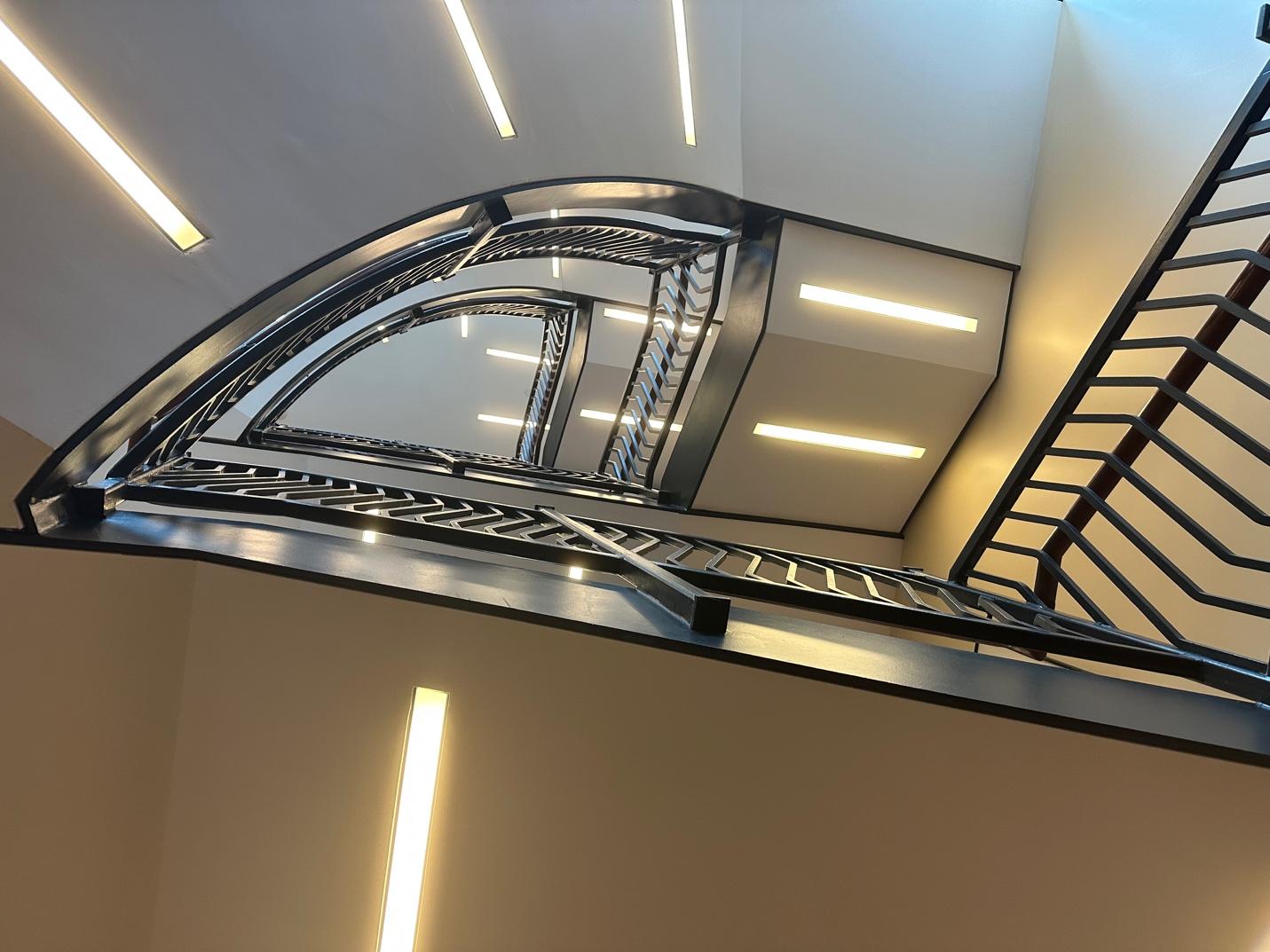
The grand staircase that was added during the expansion of Stoeckel Hall in 2008.
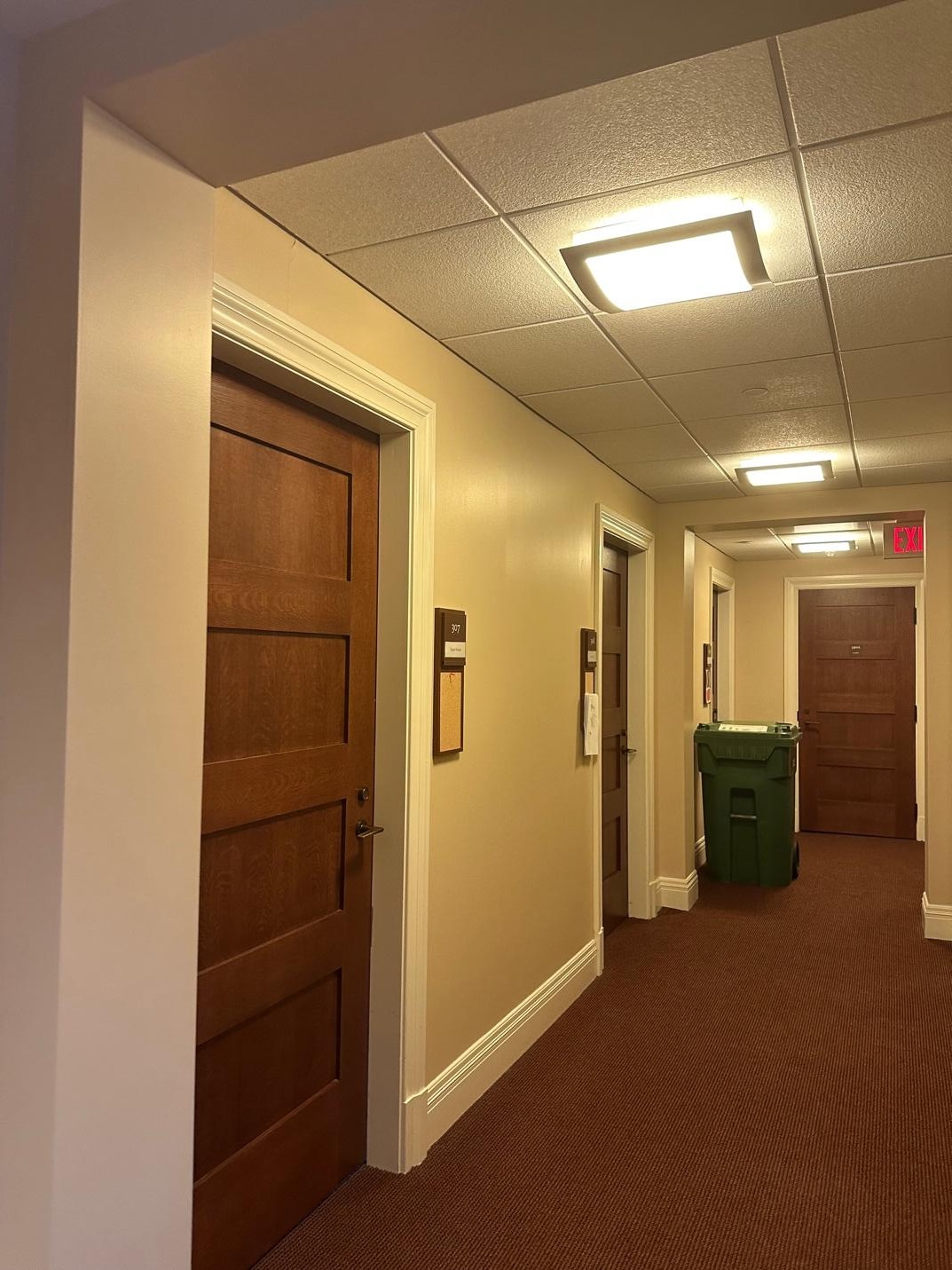
Offices of different faculty members of the School of Music.
Comments
You are not logged in! Please log in to comment.