
Fairhaven Furniture
72 Blatchley Avenue, New Haven, CT
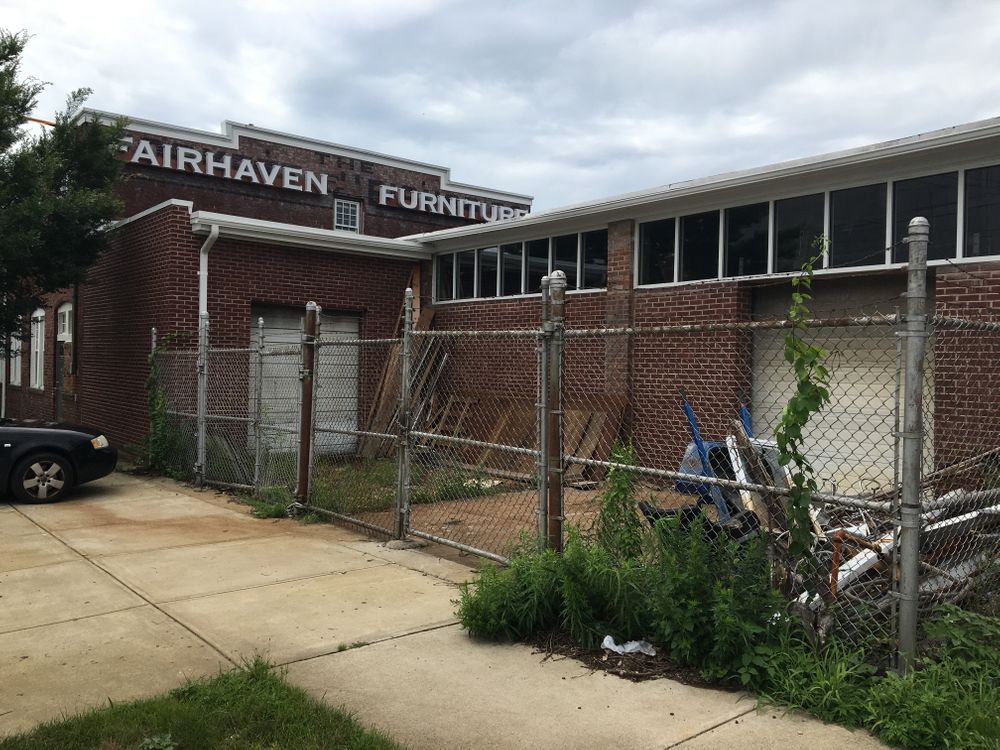
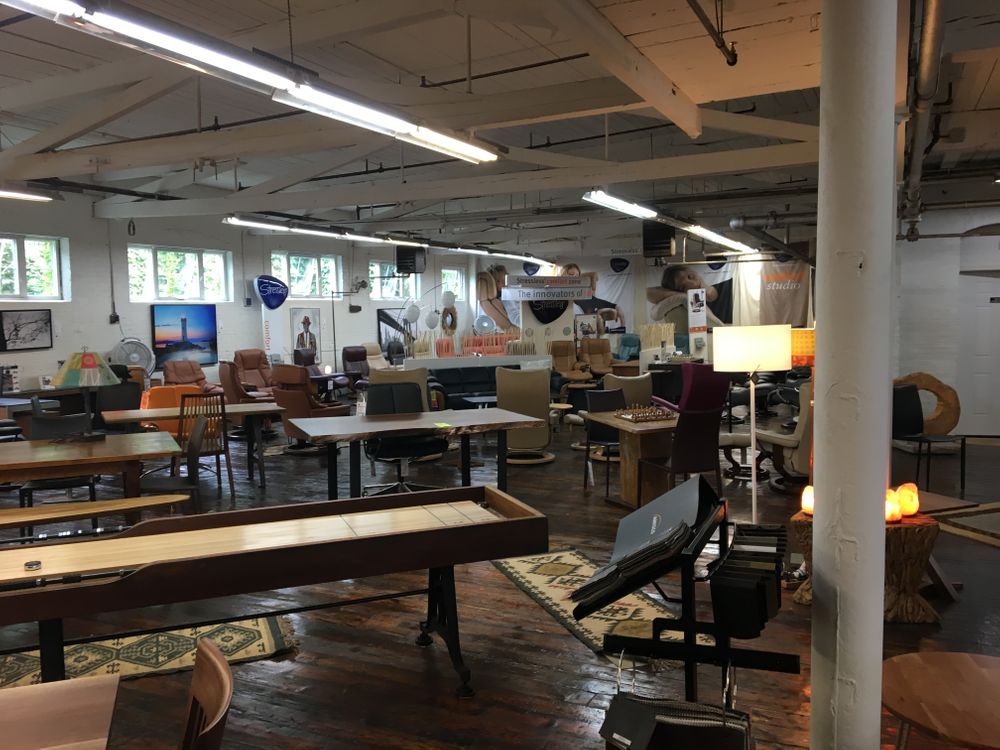
A "destination" furniture outlet located within one of New Haven's last sizable industrial streetscapes, Fairhaven Furniture has occupied the former Foskett and Bishop pipe manufacturing building since the 1980s. Specialty desks, chairs, and shuffle-boarding tables now occupy the long, open-floor mill space where metalworkers once made pipes, sprinklers, and feed-water heaters to accompany the Bigelow boilers churned out down the street. The 0.3-acre structure announces itself on Blatchley Avenue with new white and tan windows that burst from the original 1904 brick facade; once inside, blood-red pipes and a 1940s-era freight elevator with exposed mechanical pulley keep the building's history front and center. Since Fairhaven Furniture gets little foot traffic from the surrounding industrial area, it advertises extensively throughout the Elm City and its environs.
Foskett and Bishop- 1893-1947
Vacant 1947-1981
Fair Haven Furniture- 1981-Present
This building was constructed for industrial uses with 3 floors and originally housed Foskett and Bishop in 1893. This company operated in New Haven from 1893-1947. According to New Haven Colony Historical Society, the company was a contractor for steam, gas, and water piping. They also furnished businesses, schools, and churched with piping, steam traps, sprinklers, etc. Some of their clients included Yale, New Haven Railroad, New Haven Clock Company. Industrial areas such as Fair Haven boomed during a period of rapid economic expansion in New Haven, but suffered after the economy slowed. The company suffered many loses and closed their operations at this location. In 1981 Fair Haven Furniture became the new tenant of the first floor, and eventually took over the entire building in 2015. The new owners aimed to celebrate the history of the neighborhood and city by creating a museum-like atmosphere.
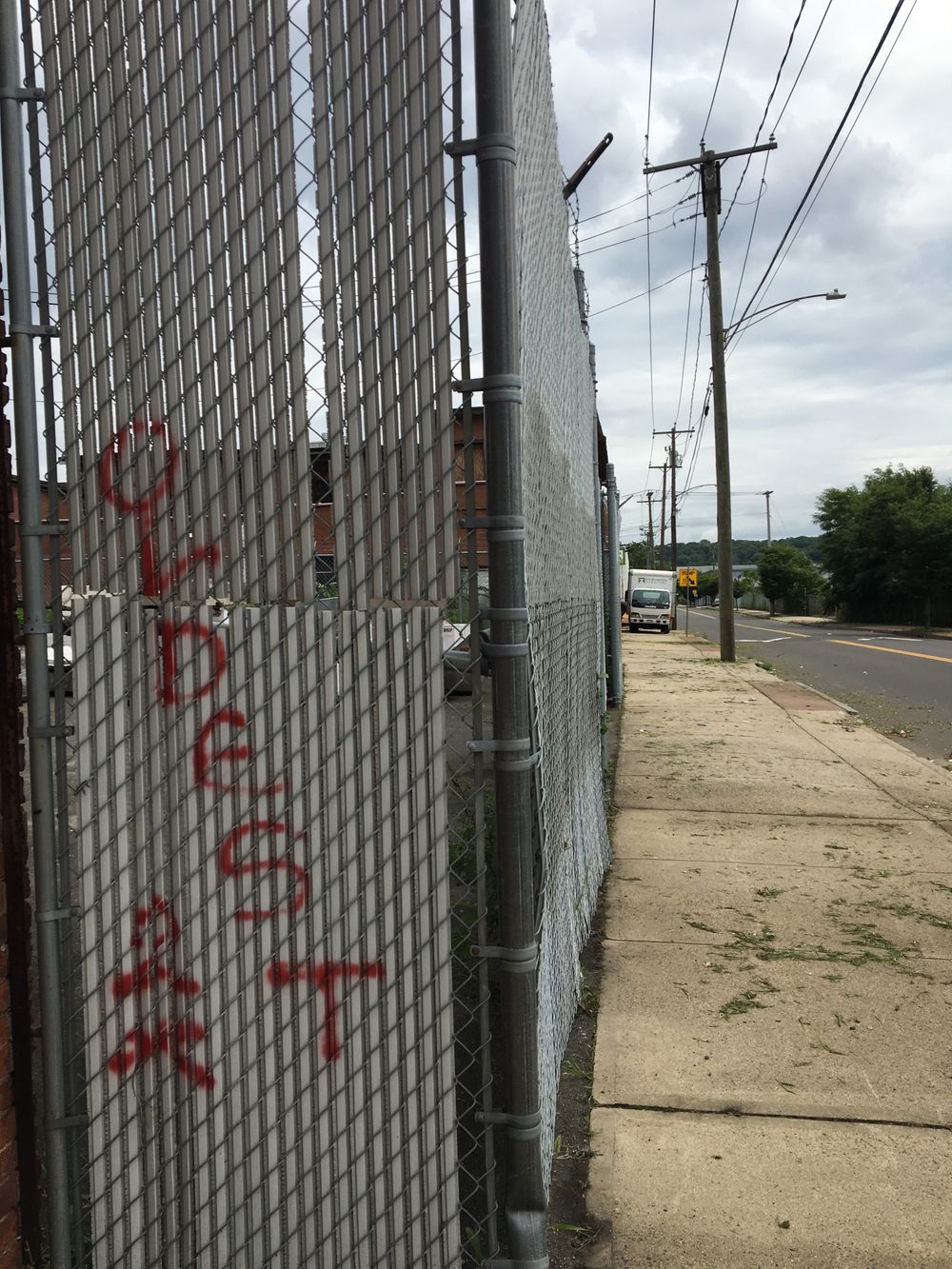
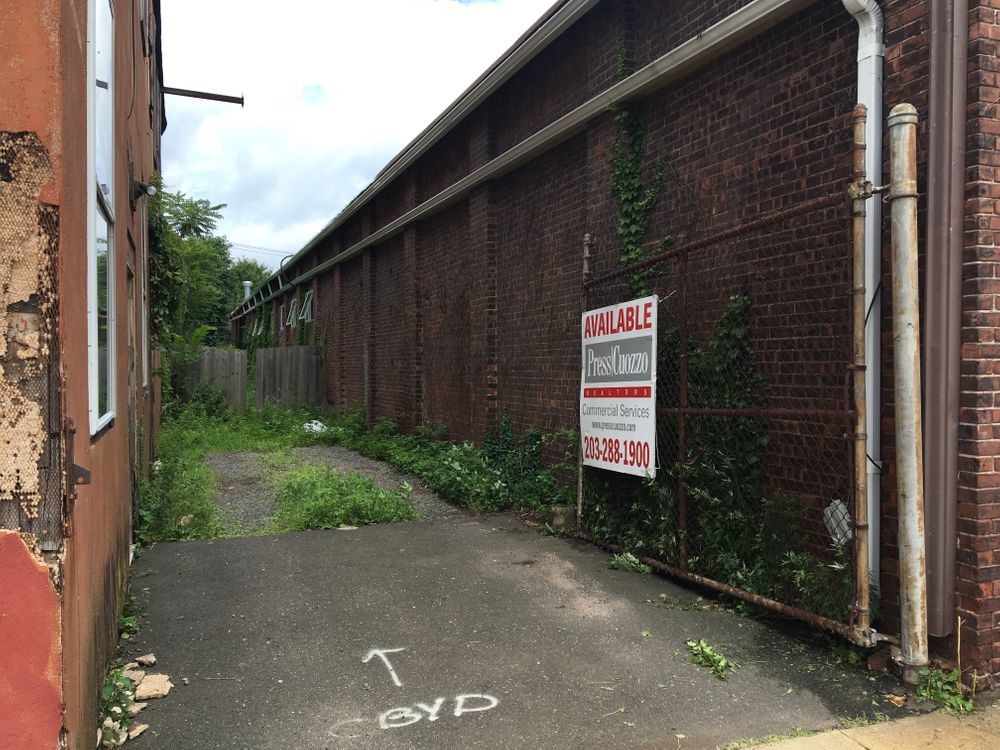
This building sits at the end of Blatchley Ave, close to River Street and Chapel Street. Due to the area's industrial roots, the sidewalks are smaller than normal. The neighborhood is bordered by the Quinnipiac River and the building is close to a marine construction company. On the River Street, it neighbors an abandoned lot with overgrown grass and trees which is directly on the Quinnipiac River. Much of the neighborhood is industrial; there are no immediate houses in the area, instead there are warehouses and even some sheds. Parking on this block of Blatchley does not consist of typical urban parallel parking spots, but rather diagonal spots as you might find in a parking lot. The sidewalk has identical trees lining the edge, which give the building a more inviting and open look. Less than a block away, Chapel Street houses a more inhabited area with some houses and a Catholic Church. On Chapel, the Latino community's impact on Fair Haven is more clearly felt.
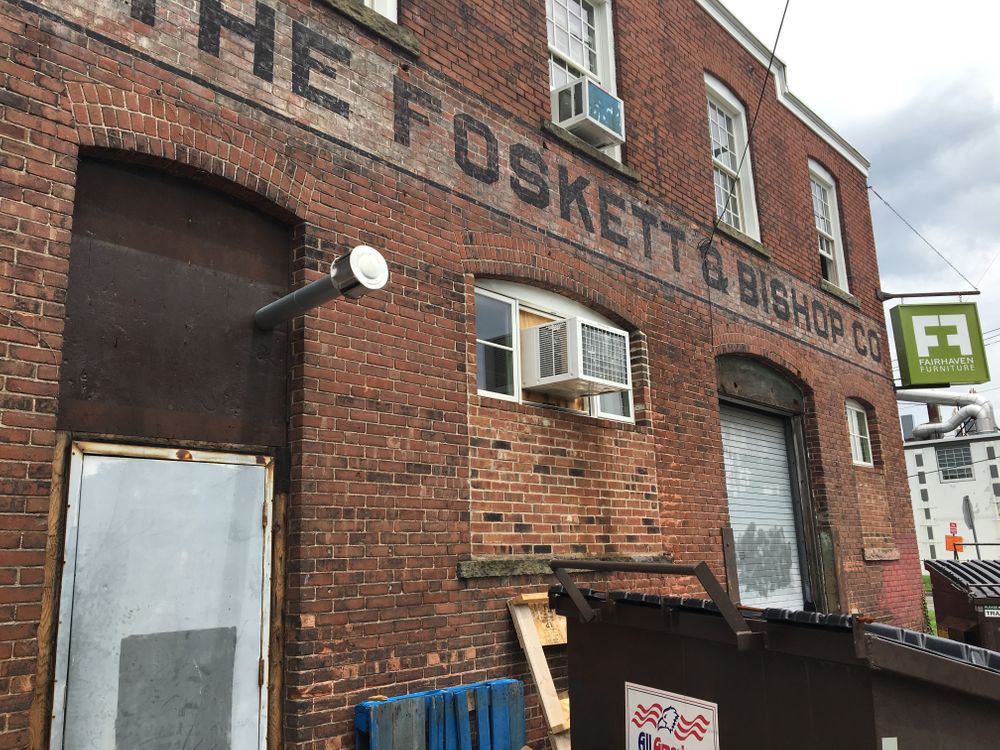
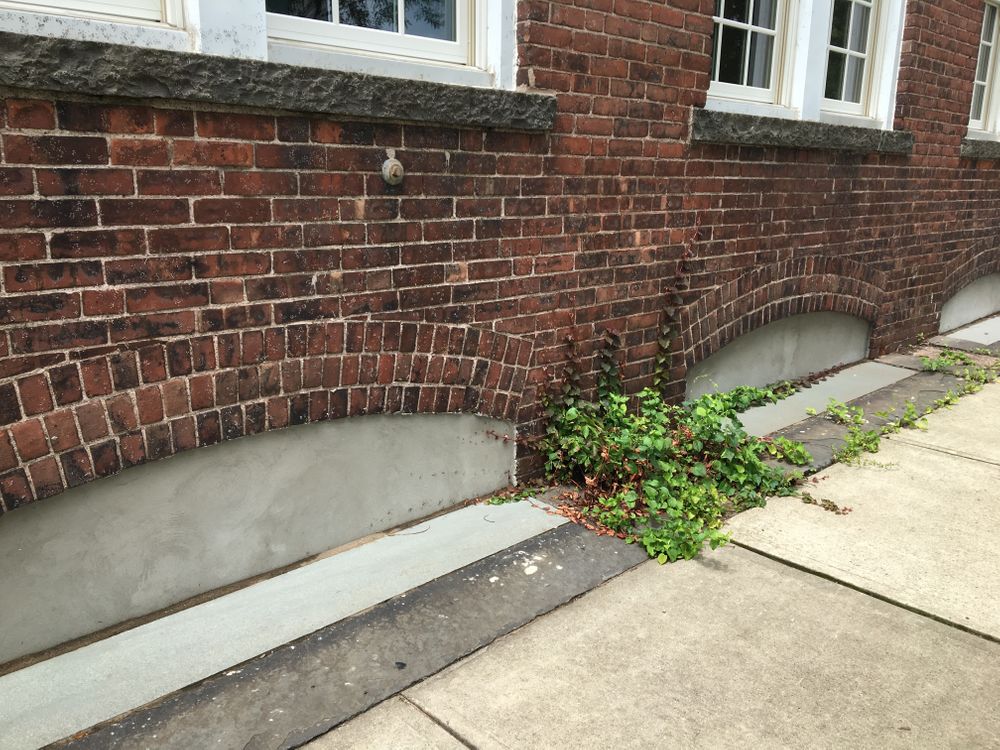
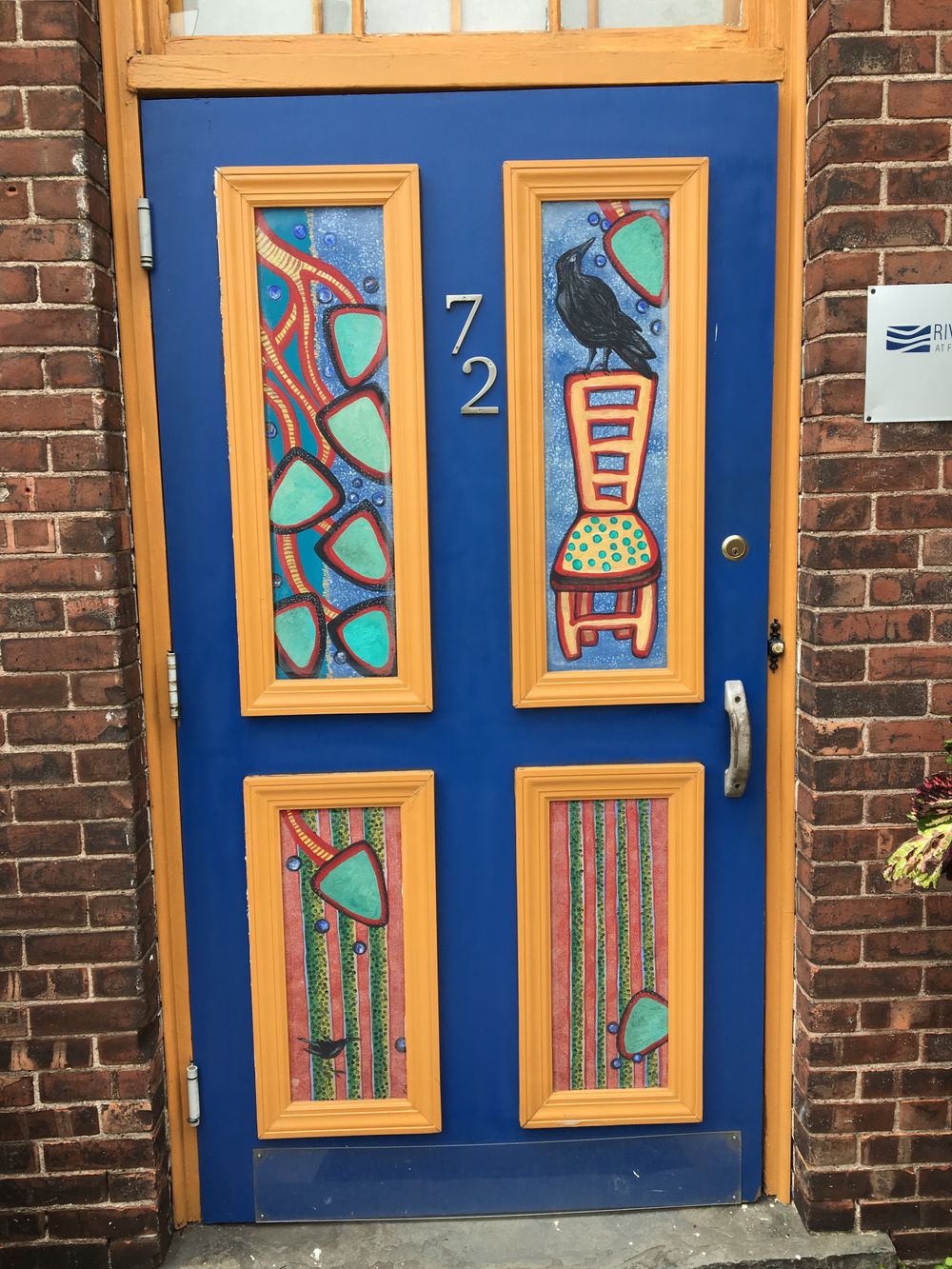
The rectangular building has exposed brick all around the perimeter, with white lined windows running down the face of the building. The exposed brick has been replaced throughout the years, as some appear to have a darker shade of red from exposure to the sun, while others appear more vibrant. The old Foskett and Bishop sign on the River street side of the building continues to fade into the brick. The front door has a mosaic of various colors with a blue background color. This colorful door stands out from the rest of the building, which is fairly homogenous. A 9- tile window lies above this door, which appears to be a recent modification. The windows appear to have a Georgian flair. The building's roof is flat and made of tin and roll asphalt.
“76 BLATCHLEY AV.” Vision Government Solutions, gis.vgsi.com/newhavenct/Parcel.aspx?pid=8100.
“Catalog of Manuscript Collections.” New Haven Museum, www.newhavenmuseum.org/library/catalog-of-manuscript-collections/?album=1&gallery=188.
Cody, Sarah. “After 35 Years, An Alternative Furniture Retailer Spreading Eclectic Culture.” Courant.com, Hartford Courant, 12 Dec. 2018, www.courant.com/business/hc-fairhaven-furniture-main-street-20151129-story.html.
Foskett & Bishop Co. New Haven, 15 Sept. 2016.
“Group C Inc.” Group C Inc, www.groupcinc.com/projects/fairhaven-furniture/.
Hill, Everett Gleason. A Modern History of New Haven and Eastern New Haven County. S.J. Clarke, 1918.
“Historic Mills of Connecticut.” Foskett and Bishop Co. | Making Places, connecticutmills.org/find/details/foskett-and-bishop-co.
Lambe, John Patrick. The Foskett and Bishop Co. Records 1893-1947. New Haven, 23 Feb. 1979.
“Sanborn Fire Insurance Maps, New Haven.” Yale Sanborn Maps , yalemaps.maps.arcgis.com/apps/webappviewer/index.html?id=1668098ec0054b339e72fb054cf3ab3d.
United States, Congress, National Park Service. “National Register of Historic Places Registration FormDEC 2 " 1988NATIONAL .” National Register of Historic Places Registration FormDEC 2 " 1988NATIONAL , National Register, 1988, pp. 7–10.
Saved edits to this building (newest first). Each row is logged when an editor saves changes.
| When | Editor |
|---|---|
| May 3, 2026, 12:24 AM ET | sasha.ranis |
| May 3, 2026, 12:23 AM ET | sasha.ranis |
Researcher
Robert Scaramuccia; Esmeralda Lugo
Date Researched
2020
Entry Created
April 9, 2018 at 11:27 PM EST
Last Updated
May 3, 2026 at 12:24 AM EST by sasha.ranis
Historic Name
Foskett and Bishop Building
Style
Colonial / GeorgianCurrent Use
CommercialManufacturingWarehouse/StorageEra
1860-1910Neighborhood
Fair HavenYear Built
1904
Architect
Unknown
Current Tenant
Fair Haven Furniture
Roof Types
FlatStructural Conditions
Good
Street Visibilities
Yes
Threats
None knownExternal Conditions
Good
Dimensions
25,000 square ft.
Street Visibilities
Yes
Owner
Triffin and Orsini
Ownernishp Type
Private
Client
Foskett and Bishop
Historic Uses
IndustrialRetailWarehouse/StorageArt Studio/Workshop/PrintingManufacturing












Comments
You are not logged in! Please log in to comment.