464 Congress Avenue, New Haven, CT, 06510
464 Congress Avenue, New Haven, CT, 06510
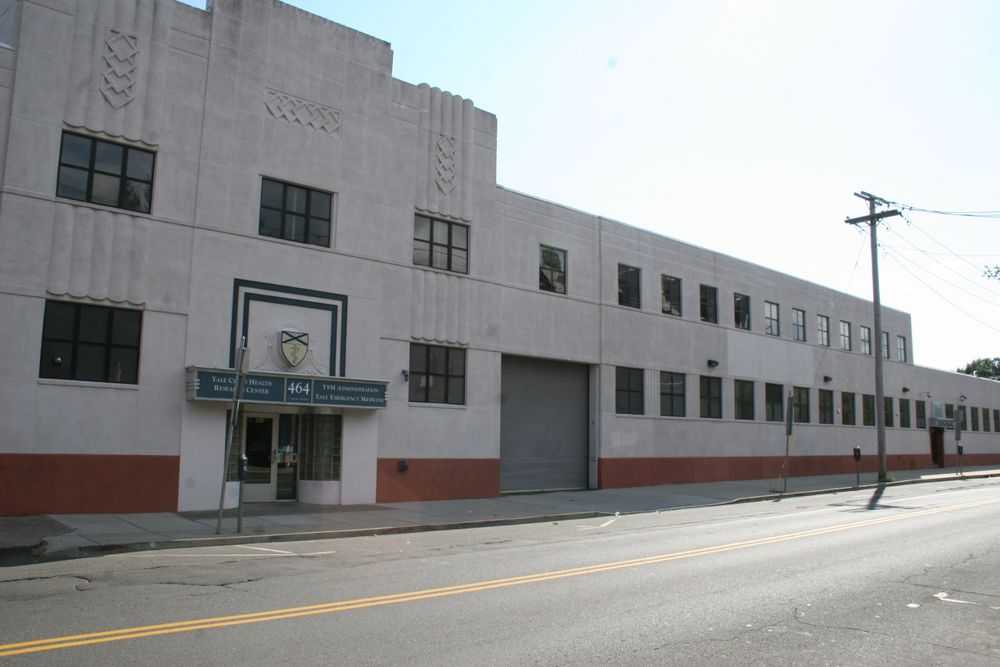
The exterior of a building gives the viewer a complete history of the structure. From the weathering of snow, rain and sun, to restorations and façade changes, the elevation of a structure can gives the viewer glimpses of the previous lives of a building. With two large garage doors clearly visible, the façade of 464 Congress tells us that the building has had a history of being used as a manufacturing facility. Also, from the decorative ornamentation and relatively clean façade, the viewer can infer that the building has undergone a type of renovation in the past twenty five years. These clues give us a small snapshot into the life of 464 Congress. According to the earliest sanborn maps of New Haven, during the late 19th century and early 20th century, the surrounding area of 464 Congress began to undergo a series of changes and transitions from a residential area into a mixed-use and manufacturing hub for the developing city of New Haven. In 1886, the area maintained a large working-class neighborhood that supported smaller privately owned stores and shops. 464 Congress, in 1886, was adjacent to a drugstore, as well as housed its own private saloon. In addition, directly to the south of the site was a street, Stevens Street, that appears on earlier sanborn maps. This disappearing street is a testament to the residential character that was once 464 Congress. Stevens Street was a minor artery that most likely served as a “convenience street,” created to reduce travel distances; however, never serving as a major artery for street traffic. The turn of the century brought about a new trend in the surrounding area. With more families moving into the area, stores and artisans began to settle down and create a business-like environment that promoted early development. From this, an early commercial strip began to appear. With the budding city of New Haven only a number of blocks away, Congress Avenue began to serve as a thorough-fare, connecting the residential band of the city to New Haven’s growing downtown. However, this only lasted for a period of about twenty years; the New Haven manufacturing boom pushed out small enterprise and created an entirely new market for growth along Congress Avenue. The turn of the century brought a New Haven manufacturing boom that lasted approximately fifty years. With large manufacturers moving into the area, such as the Baumann Rubber Company in 1924, the area became increasingly more commercial, until a new owner purchased a number of properties in the area and began to change the character of the area into a mixed-use development. Charles Rosenstein of Los Angeles began purchasing property in the area during the 1950s and extended the site into the adjacent building. Similar development happened in subsequent years, until in 1973, the Yale School of Medicine purchased 464 Congress Avenue, and its sister building 470 Congress Avenue. Timeline: 1886: Site used to house a saloon along a commercial strip with multiple smaller mixed use buildings. 1901: Wood frame buildings start to appear; still smaller stores dominate the area. 1911: A strong number of wooden structural buildings are present, creating a commercial strip. 1924:Dense Manufacturing Area 1950: Purchased by Charles Rosenstein 1973: Purchased by the Yale School of Medicine
Researcher
Guillermo Peralta
Entry Created
June 4, 2017 at 8:47 AM EST
Last Updated
June 4, 2017 at 8:47 AM EST
Style
Current Use
Era
Neighborhood
OtherTours
Preservation &Renewal towards Trowbridge SquareCurrent Tenant
Yale School of Medicine
Roof Types
Threats
Historic Uses
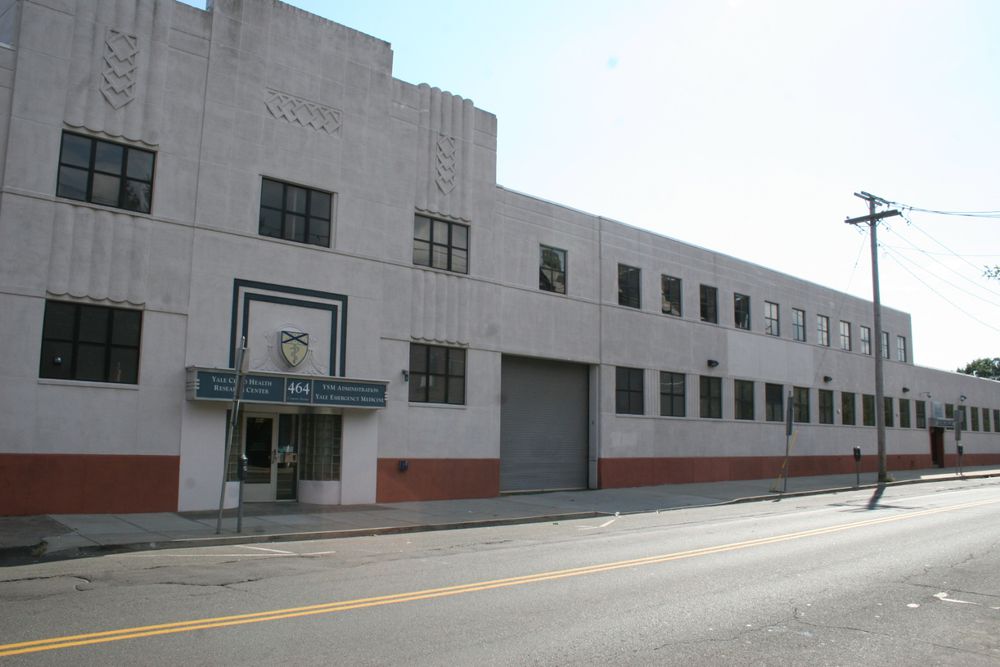
Figure 1: 464 Congress, Sept. 19, 2010
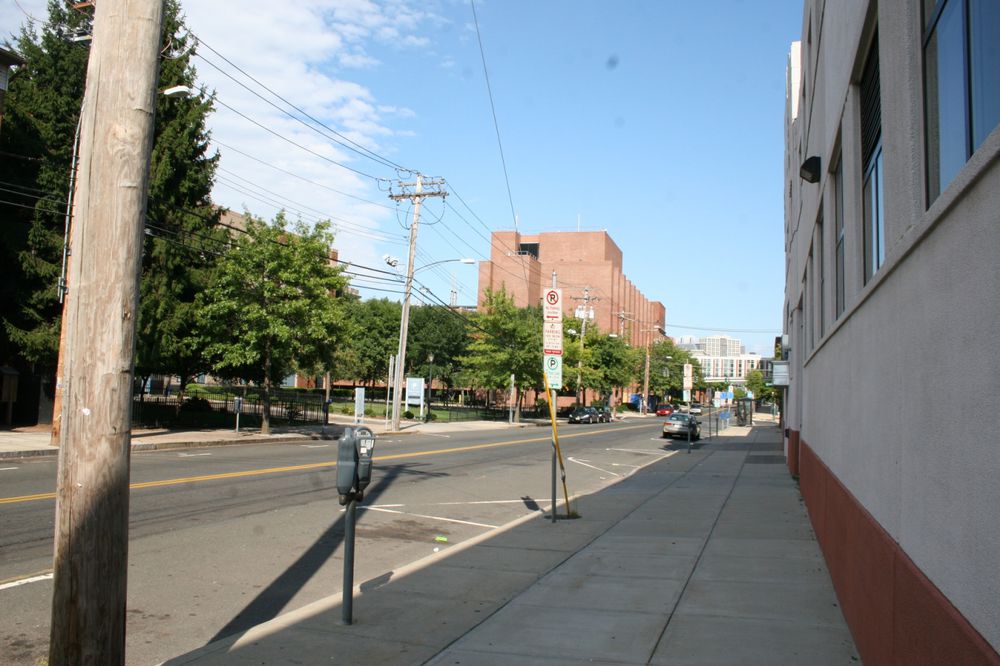
Figure 2: Northern view of Congress Avenue
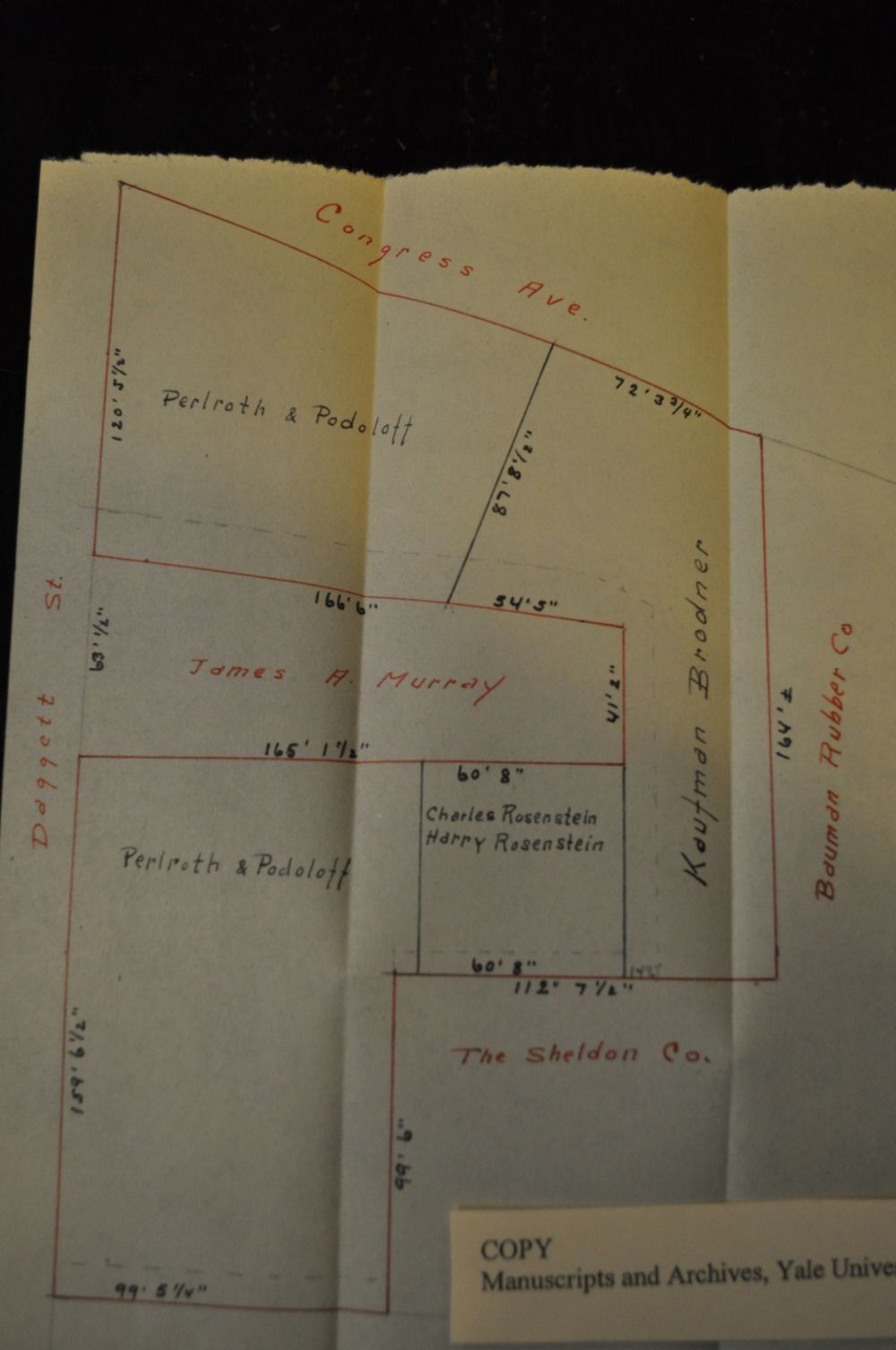
Figure 3: Map Of Site 1950s
Comments
You are not logged in! Please log in to comment.